

You didn’t lift anything heavy. You didn’t overdo a workout. Yet you wake up with a stiff neck, aching shoulder, or tight lower back. In many cases, the culprit is simple: muscle strain from sleeping. That’s right, your sleep position matters.
Sleep should help your body recover, but certain sleeping positions place muscles and joints under tension for hours at a time. When the spine falls out of alignment or muscles stay contracted overnight, it can lead to muscle strain, nerve compression, and lingering soreness that follows you throughout the day.
The good news is that your sleep position often explains where the pain shows up. Understanding how your body is positioned at night c
What Side Sleepers Need to Know
Muscles commonly affected by side sleeping
- Neck muscles (sternocleidomastoid and upper trapezius)
- Shoulder muscles (deltoids and rotator cuff)
- Hip stabilizers (gluteus medius and minimus)
- Lower back muscles (quadratus lumborum)
- Outer thigh and IT band
Side sleeping is one of the most common sleep positions, and it can be comfortable when the spine stays aligned. The problem is that many people curl forward slightly or allow their top shoulder to roll inward. This creates rotation in the upper spine and places uneven pressure on the neck and shoulders.
When the head sinks too low or tilts upward due to pillow height, neck muscles stay engaged for hours trying to stabilize the head. At the same time, the bottom shoulder absorbs body weight while the hips twist forward. Over time, this combination can create muscle strain from sleeping, especially in the neck, upper back, and hips.
The issue often gets worse if the mattress is too soft or if the knees collapse toward each other during sleep.

What Stomach Sleepers Need to Know
Muscles commonly affected by stomach sleeping:
- Cervical spine muscles (neck extensors)
- Lower back muscles (erector spinae)
- Hip flexors
- Shoulder stabilizers
- Chest muscles (pectorals)
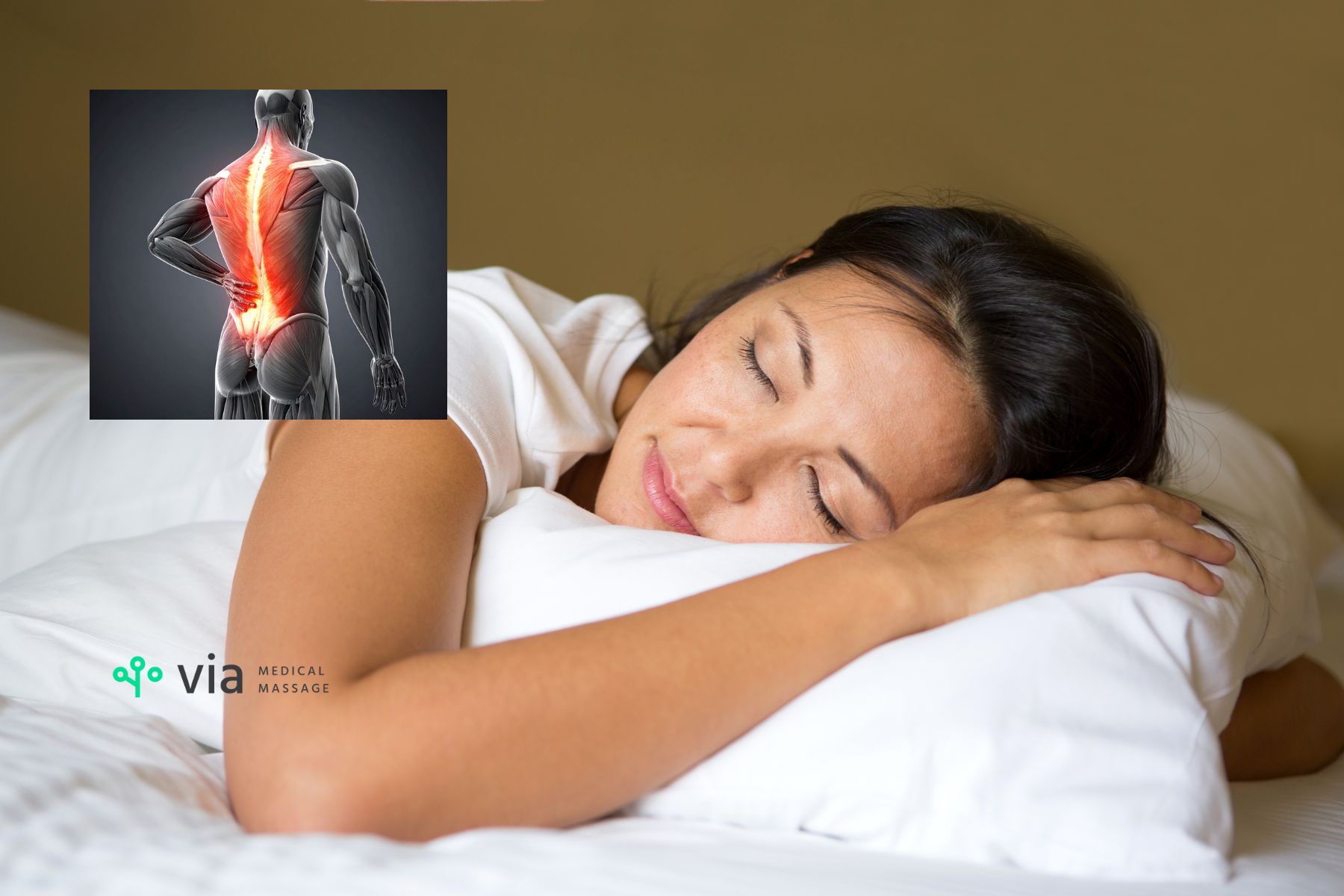
Stomach sleeping is one of the toughest positions on the body. It forces the head to rotate sharply to one side so you can breathe, which twists the cervical spine for long periods of time. That rotation places constant tension on the neck muscles and upper back.
At the same time, the lower back sinks toward the mattress while the hips stay extended. This position compresses the lumbar spine and can tighten the muscles that support it. Many stomach sleepers wake up with neck stiffness, lower back pain, or soreness between the shoulder blades.
If a pillow is used under the head, it often exaggerates the neck angle even more. The result is a classic case of muscle strain from sleeping, especially after several nights in a row.
What Back Sleepers Need to Know
Muscles commonly affected by back sleeping:
- Neck stabilizers
- Upper trapezius
- Lower back muscles
- Hip flexors
- Hamstrings
Back sleeping is often considered the most neutral position, but it can still cause problems if the body is not supported properly. When the head tilts too far forward or backward due to pillow height, the neck muscles must compensate to stabilize the head throughout the night.
The lower back is another common issue. If the mattress doesn’t support the natural curve of the spine, the lumbar region may arch too much. This can cause the surrounding muscles to tighten as they try to maintain stability.
Back sleepers may also experience muscle tension in the hips and hamstrings if the legs remain flat without support. Over time, these small stresses can lead to muscle strain from sleeping, even if the position itself seems comfortable.
MORE: A Guide to the Glymphatic System: How the Brain Clears Waste While You Sleep

How to Minimize Muscle Pain While Sleeping
Side Sleepers
Side sleepers can reduce muscle strain by focusing on spinal alignment. The head should stay level with the spine rather than tilted up or down. A pillow that fills the space between the head and shoulder helps keep the neck neutral.
Placing a pillow between the knees can also make a big difference. This prevents the top leg from pulling the pelvis forward, which reduces strain on the lower back and hips. If shoulder pain is common, alternating sides and using a mattress that supports the shoulder without excessive sinking can help.
Products We Recommend for Side Sleepers
Jennifer, one of our regular clients, is a habitual side sleeper, and we treat some serious neck and shoulder pain from her fetal-position sleep style.
Here are a few products she swears by:
- Knee Support Pillow: Jennifer tells us it’s important to get one with a strap that keeps the pillow in place overnight, especially if you are prone to tossing and turning.
- Side Sleeper Pillow: This L-shaped pillow helps support the side sleeping position, leading to less stress on your shoulder, knees, hips, and back.
- Neck Support Pillow: Keeps your shoulders more aligned while sleeping on your side.
Stomach Sleepers
The best solution for stomach sleepers is gradually transitioning to another position, but small changes can still reduce strain.
Using a very thin pillow or no pillow under the head helps minimize neck rotation. Placing a pillow under the pelvis can also reduce the arch in the lower back and relieve pressure on the lumbar spine.
If neck pain is frequent, training the body to shift toward a side sleeping position often provides the most relief over time.
Products We Recommend for Stomach Sleepers
- Thin Pillow: Stomach sleepers need a thin pillow to prevent the neck and head from being out of position during rest. Consider getting two so you can put one under your pelvis and help support spine alignment.
- Memory Foam Pillow: The “give” in a memory foam pillow allows your head to sink in while allowing cervical spine alignment.
- Anti-Allergy Pillow Covers: Since you’re face down in a pillow most of the night, avoid congestion or other allergy triggers by having a hypoallergenic cover on your pillows.
Back Sleepers
Back sleepers benefit from maintaining the natural curves of the spine. A pillow that supports the neck without pushing the head too far forward is key.
Placing a pillow under the knees can reduce strain on the lower back by preventing excessive arching. This small adjustment allows the lumbar muscles to relax during the night rather than staying engaged for hours.
Back sleepers who experience neck stiffness should also check pillow height and firmness, as the wrong pillow can force the neck into flexion or extension while sleeping.
Products We Recommend for Back Sleepers
- Back sleeper pillow: The gentle cradling action of this pillow helps keep your head and neck stable if you’re moving around a lot in your sleep.
- Ergonomic cervical pillow: The unique design supports your neck while sleeping on your back, but also has benefits if you tend to switch positions overnight.
- Bed wedge pillow: Also recommended for post-surgery recovery, the elevated nature of a bed wedge keeps back sleepers aligned. Plus, that elevation also helps reduce snoring and apnea incidents.
When Massage Can Help Muscle Strain From Sleeping
Even with the best sleep habits, muscle strain from sleeping can build up over time. Tight neck muscles, shoulder tension, and lower back soreness are common complaints we see in the clinic.
Medical massage can help release those patterns of tension and restore normal muscle function. Techniques such as deep tissue massage, trigger point therapy, and targeted neck and shoulder work can reduce inflammation and improve mobility.
For people who clench their jaw or grind their teeth during sleep, TMJ massage can also relieve the tension that builds overnight.
Don’t wait until muscle pain from a bad sleeping position gets in your way. Regular medical massage can help correct tension patterns, improve mobility, and keep everyday aches from becoming chronic problems. Whether you need deep tissue work, trigger point therapy, or TMJ massage for nighttime jaw tension, the team at Via Medical Massage can help you wake up feeling better.
Our online booking portal is open 24/7, and we have two locations in Lincoln and one in Omaha (Elkhorn) to best serve the eastern Nebraska communities.