

Some people check the weather app. Others just check their body. The weather impacts your body in ways you might know, and in some ways you might not realize.
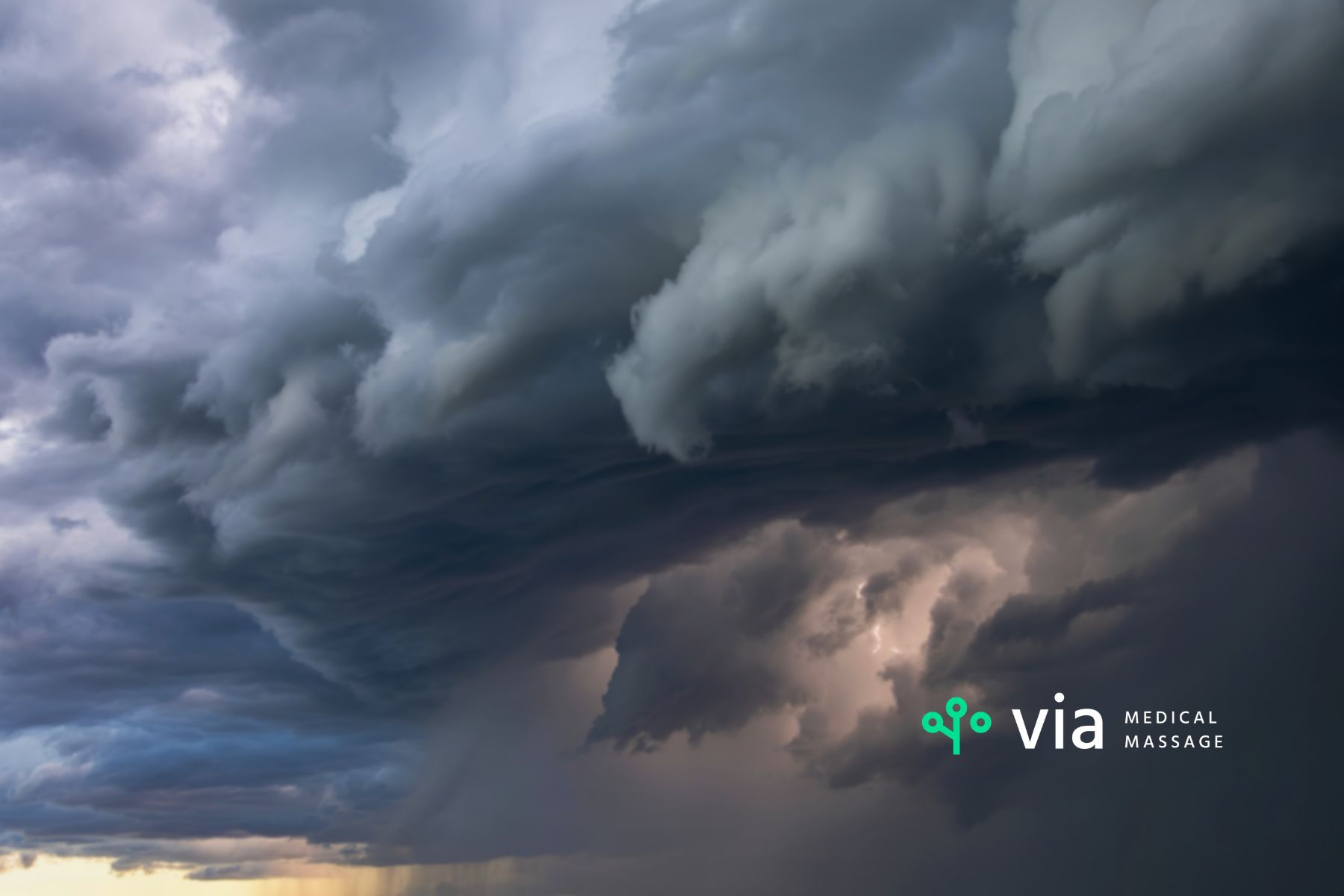
If you’ve ever felt a headache coming on before a storm, noticed your joints stiffen overnight, or wondered why your energy suddenly dropped for no clear reason, you’re not imagining it. Your body is constantly reacting to changes in the environment, especially shifts in barometric pressure, temperature, and humidity.
In places where the weather moves fast, like Eastern Nebraska, those changes can hit harder and more often. One minute everything feels normal, the next your muscles tighten, your head feels off, or old injuries start reminding you they exist. It’s not random. It’s your body trying to adjust in real time.
Understanding how the weather impacts your body is the first step to managing it, instead of just powering through it. Plus, how massage can help your body when it’s going through rough weather.
Why Nebraska Weather Makes It Worse
Living in Nebraska means dealing with big weather swings. Warm days can flip into cold nights. Storm systems can roll through within hours. Pressure changes are frequent, not occasional.
That constant shift keeps your body in a reactive state. Instead of adapting once and settling, it’s adjusting over and over again.
For people already dealing with inflammation, circulation issues, or muscle tension, that can lead to a cycle of discomfort that feels hard to break.
Some of the people who are most likely to feel the impacts of weather shifts include:
- People with arthritis or joint conditions, where pressure shifts can increase inflammation and stiffness
- Anyone with old injuries, especially fractures or surgical sites that remain sensitive
- Migraine or chronic headache sufferers, often triggered by pressure drops
- People with sinus issues or allergies, where pressure changes affect the sinus cavities
- Those with chronic pain conditions like fibromyalgia
- Individuals with TMJ or jaw tension, which can flare with stress and pressure shifts
- People prone to swelling or fluid retention, especially in the legs and feet
- Athletes or highly active individuals with muscle tightness or overuse injuries
- Anyone dealing with high stress or anxiety, since the nervous system is already on edge
- Older adults, whose joints and tissues tend to be more sensitive to environmental changes
Add to it the stress that can come with potentially life-threatening weather, as we see too often in Nebraska, and it might just be time to book a pre-storm massage.
How Massage Therapy Can Help
Massage therapy doesn’t stop the weather, but it can absolutely help your body handle it better.
The biggest benefit is improved circulation. When your blood flow moves more efficiently, your tissues get the oxygen and nutrients they need to stay flexible and responsive, even when pressure changes are working against you.
Massage also helps reduce muscle tension. When your muscles are already tight, pressure changes tend to hit harder. Loosening those areas gives your body more room to adjust without triggering pain.
For people dealing with swelling or that heavy, puffy feeling, techniques like manual lymphatic drainage can help move fluid more effectively. That can make a noticeable difference, especially during low-pressure systems.
There’s also a nervous system component that often gets overlooked. Barometric pressure changes can put your body into a subtle stress response. Massage helps shift you out of that state. When your nervous system calms down, your perception of pain can decrease, and your body can regulate itself more efficiently.
Types of Massage That Work Best
Not every massage approach is the same, especially when you’re dealing with weather-related pain. At Via Medical Massage in Lincoln and Omaha, we’ll work with your specific needs, not follow a cookie-cutter massage approach.
- Therapeutic massage and deep tissue work can help target areas of chronic tension, especially in the neck, shoulders, and lower back.
- Trigger point therapy is useful when pressure changes seem to “light up” specific spots, and that can also be mixed with deep tissue massage if you need deeper layers of care.
- Manual lymphatic drainage is a good option for swelling or fluid retention, which can increase during pressure shifts.
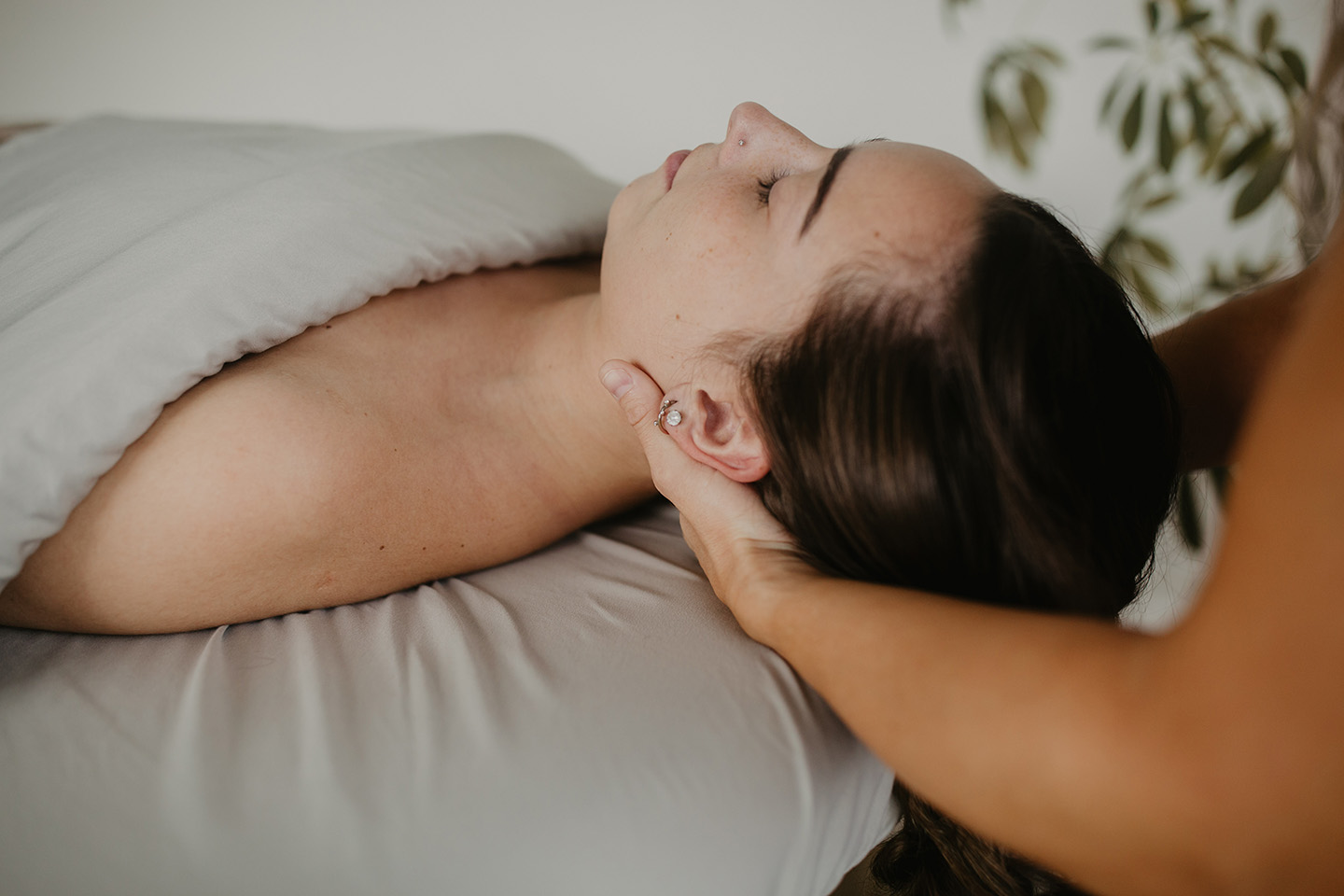
- For headaches and sinus pressure, cranial work and focused massage around the head, neck, and jaw can provide relief while also helping regulate your nervous system.
The key is working with a therapist who adjusts techniques based on what your body needs that day. Weather-related symptoms are not always predictable, so your treatment shouldn’t be either.
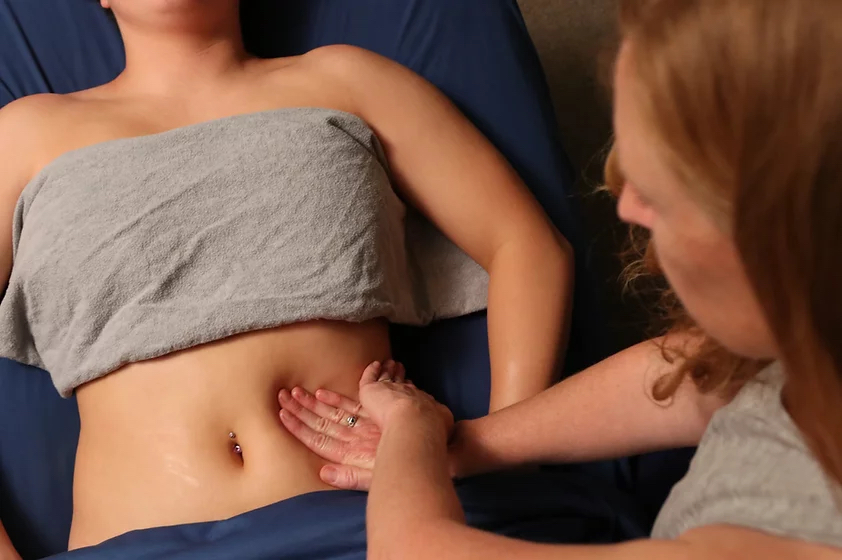
When to Book a Massage for Weather-Related Pain
If you know a storm system is coming in and you tend to feel it, getting ahead of it can help. A session before a major pressure drop can reduce baseline tension and make symptoms less intense.
If you’re already feeling the effects, massage can help relieve the discomfort and get your body back to a more balanced state.
Some people in Nebraska benefit from more consistent sessions during seasons with frequent weather swings, like spring and fall. If you’re not feeling well, check in with your therapist or read our article about whether you are too sick for a massage.
How Weather Impacts the Body Matters More Than You Think
It’s easy to brush off weather-related pain as something you just have to deal with. But when it becomes a pattern, it can affect how you move, sleep, and function day to day. Addressing it early with targeted massage therapy can help prevent that discomfort from turning into something more chronic.
At Via Medical Massage, the focus is on understanding how external factors like barometric pressure impact your body and responding with the right techniques. Whether you’re dealing with headaches before storms, joint stiffness during cold fronts, or general tension that comes and goes with the weather, there are ways to manage it.
You can’t control Nebraska weather. But you can control how your body responds to it. Book a session in Lincoln or Omaha today.