

When most people feel a headache coming on, the first instinct is usually to press the temples or grab the forehead. But the real culprits behind many headaches aren’t always where the pain shows up. More often than not, headaches come from the muscles in the neck, shoulders, jaw, or even the back of your head that are quietly creating all the chaos.
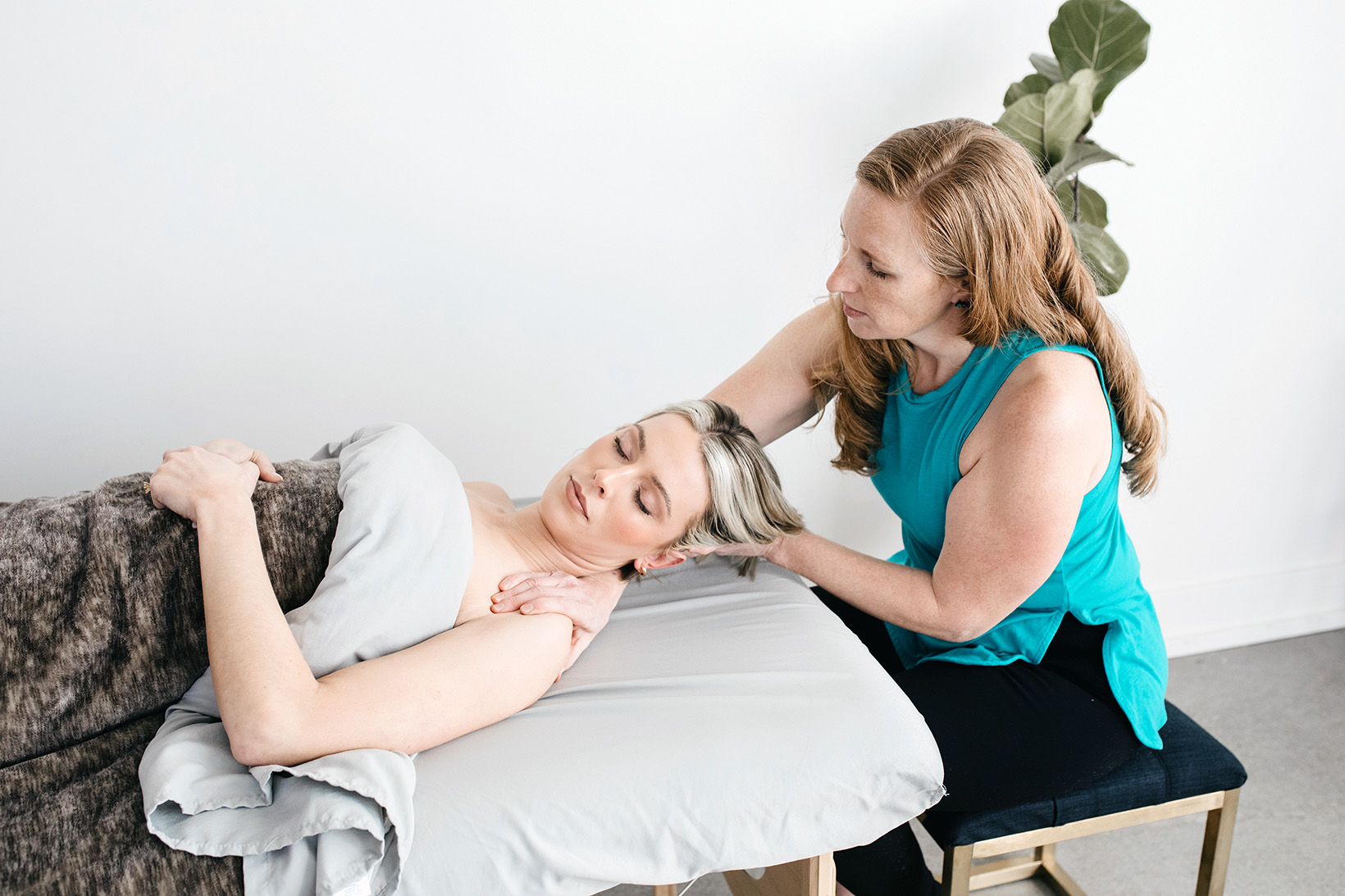
Massage therapy can be incredibly effective for reducing headaches and not just because it feels good. It also targets the actual sources of tension and referred pain by going after the headache muscles. At Via Medical Massage, we take the time to talk about your headache pain, triggers, and symptoms.
If it’s a muscular origin, we’ll follow the fibers to find the spots causing the tension and then work to release it. At the same time, we want to help you understand where your pain is coming from and give you techniques to work on at home between massage sessions.
Let’s look at some of the top culprits for that blinding headache pain and what’s making them so angry.
Trapezius: Headache Muscle OG
Let’s start with the one that carries all your stress: the trapezius, aka “traps”. This large, triangular muscle spans from the base of your skull down to the middle of your back and stretches across both shoulders. It plays a big role in posture, shoulder movement, and, unfortunately, tension headaches.
- Upper Trapezius: Most involved in headaches. These fibers run from the shoulder to the neck and skull, and they’re often overused during stress, phone use, and poor posture.
- Lower Trapezius: These run from the middle back upward and help stabilize your shoulders. If they’re weak or underactive, your upper traps tend to compensate, which increases neck strain.
Tightness in the upper traps can send referred pain up the back of the neck and into the head. It’s common for people who sit at a desk all day or unconsciously raise their shoulders when stressed or anxious. If you find yourself massaging the tops of your shoulders every time you feel tension creeping up, the trapezius is probably involved.

Levator Scapulae
This headache muscle sits a little deeper and runs along the side of your neck, connecting the upper cervical spine to the shoulder blade. The levator scapulae helps you shrug your shoulders and turn your head. When it gets tight, it can limit your range of motion and radiate pain up the side of the neck into the base of the skull. Tension headaches and migraines connect to this buried muscle.
It’s also one of the first muscles to flare up when posture isn’t ideal. Leaning forward over a phone or computer screen for long periods can cause the levator to shorten and stiffen, which may explain those stubborn headaches that show up late in the day.

Sternocleidomastoid (SCM)
This one gets overlooked a lot, mostly because it’s not a headache muscle you typically try to stretch or massage yourself. But the sternocleidomastoid has a big job: it runs from just behind your ear (the mastoid process) to your collarbone and sternum, and it helps rotate and tilt your head.
When your head juts forward—like when you’re scrolling or slouching—the SCM has to work harder to keep your head from falling even further. It’s not just hanging out relaxed; it’s actually engaging to stabilize your head against gravity.
FIND YOUR SCM: Turn your head slightly to one side and look up just a bit. You’ll see or feel a prominent rope-like muscle pop out on the front side of your neck, running diagonally from just behind your ear to your collarbone. That’s your SCM. Try to pinch it along the length. You’ll likely notice a great deal of sensitivity along the way.
When the SCM becomes tight or develops trigger points, it can create a surprising range of referred symptoms. Some people experience pain in the forehead, around the eyes, or even in the sinuses and jaw. It can also contribute to dizziness and tension headaches that feel like pressure wrapping around the head.

Suboccipitals
These are small but mighty headache muscles at the base of your skull. They connect the top of the spine to the skull and help you nod, tilt, and rotate your head. The suboccipitals work hard to stabilize your head, especially when you’re looking at a screen, driving, or sitting with your head slightly forward.
- Rectus capitis posterior major: Connects your spine to the skull and helps extend your head (like when you look up). It also plays a role in slight head rotation.
- Rectus capitis posterior minor: A smaller muscle that also helps you look up, but it’s more about fine control and subtle head movements. It may be involved in tension at the base of the skull.
- Obliquus capitis superior: Assists with tilting the head to the side and also helps with looking up slightly. Think of it as part of the team that manages side-to-side balance.
- Obliquus capitis inferior: Despite its name, this one doesn’t attach to the skull. It rotates the head side-to-side by turning the top of the spine underneath the skull.
Tension here often causes what’s known as a cervicogenic headache. That’s pain that starts at the base of the skull and can radiate over the scalp or behind the eyes. These headaches are easy to mistake for migraines or even eye strain.

Temporalis
This muscle covers the side of the head and plays a key role in chewing. It covers the temples, but many don’t realize how far this fan-shaped muscle goes on the side of the head. Picture a giant seashell placed from the top of your jaw and over the upper portion of your ear.
While it doesn’t get as much attention as the neck and shoulder muscles, the temporalis can be a major source of head pain. If you touch your temples and then open and close your mouth, you’ll get a real-world look at how much this muscle moves when you chew or clench.
The temporalis takes a beating from those who clench their jaw or grind their teeth. Temporalis trigger points generate the kinds of headaches people describe as “sharp” or “pulsing,” and they often get worse with stress, chewing, or prolonged talking.

Masseter
The masseter is one of the strongest muscles in the body relative to its size. At the same time, it’s also one of the most common sources of tension headaches. It connects your lower jaw to the cheekbone and is responsible for closing the jaw.
Chronic jaw clenching (during the day or while sleeping) can cause this muscle to become overly tight, leading to tension in the face, teeth, ears, and temples. TMJ dysfunction often involves the masseter and temporalis muscles.
Want to test out the tension in your masseter? Make a fist and then put your knuckles on each side of your chin, just below the mouth. Stroke your knuckles up toward the ear while slowly opening your mouth. You might feel tenderness, knots, or a world of relief after doing this a few times.
External massage therapy can offer serious relief when these muscles are part of the picture, but wait until you try an intraoral TMJ massage. This is when a skilled therapist puts on gloves and goes inside your mouth to massage the muscles.

There’s a Massage for that Headache
Now that we’ve identified the culprits behind most muscular-driven headaches, it’s time for the solution. Various massage techniques can be used for headaches, and Via Medical Massage offers specific headache massage sessions from 60 to 90 minutes. You can book online today at our West Omaha (Elkhorn) location or one of two places in Lincoln.
Be sure to ask your skilled therapist about techniques and tools you can use at home between sessions.