


Chronic pain can feel like it’s coming from a muscle, but more often than you might realize, it’s something that is literally getting on your nerves. The tricky part is that muscle tension and nerve pain can sometimes feel similar at first, especially when the discomfort is deep, persistent, or hard to pinpoint.
As medical massage therapists, we see these issues a lot and want to help you understand some of the subtle differences between back pain and nerve pain. That includes what the pain feels like, where it shows up, and what tends to make each issue better or worse.
Sometimes, massage is the solution. Other times, a massage might not help beyond feeling good in the moment. We want to help you identify signs of muscle vs nerve pain and how to approach a solution to your chronic pain problems.
Muscles vs. Nerves: Roles in the Body
Before you can tell the difference between muscle pain and nerve pain, it helps to understand what muscles and nerves actually do. While they work closely together, they have very different roles in the body and tend to create very different types of discomfort when something goes wrong.
Muscles and nerves work together constantly, but they are built very differently and serve completely different purposes inside the body.
What Muscles Do
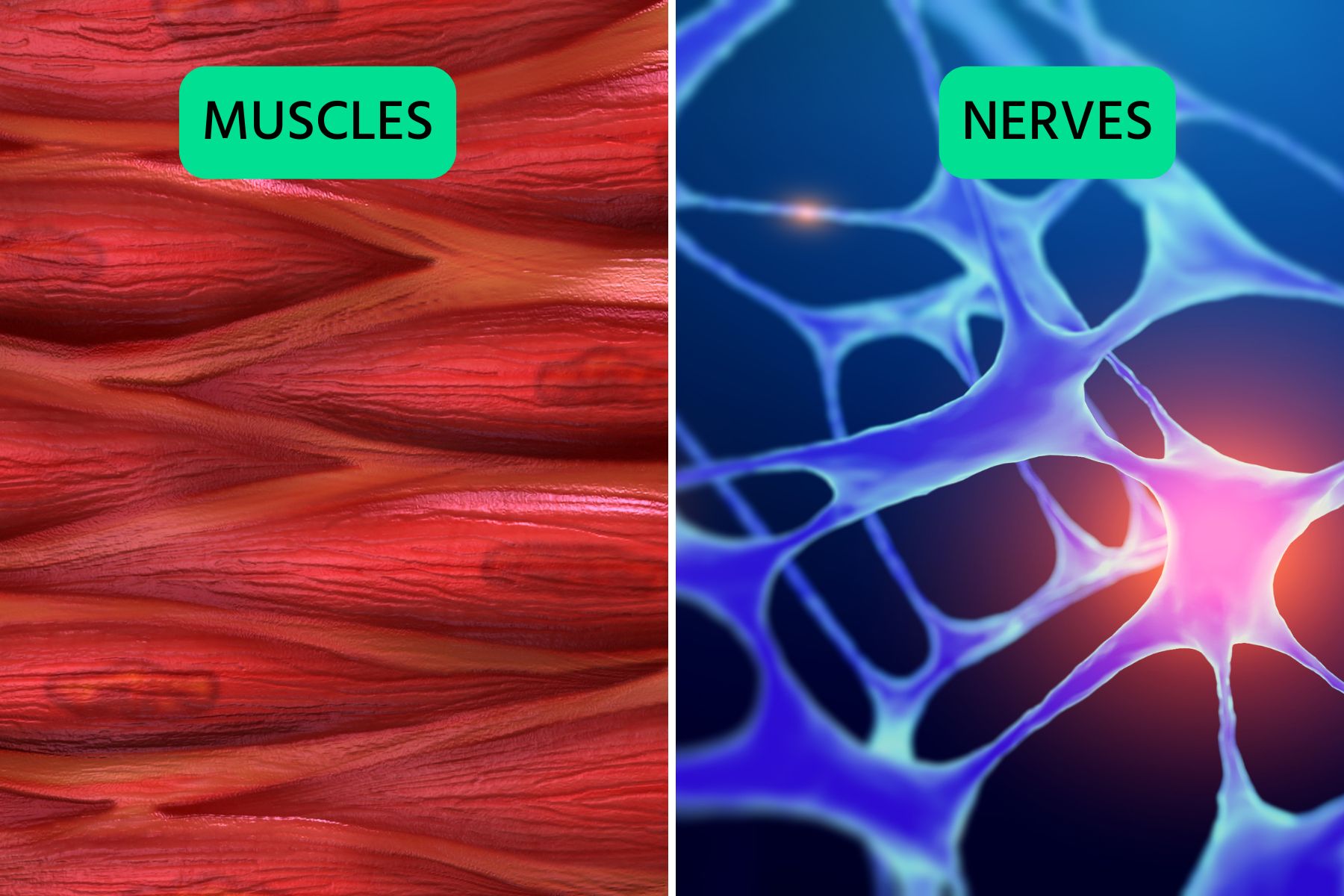
Muscles are responsible for movement, stability, posture, and strength. They contract and relax to help you walk, lift, bend, breathe, blink, and hold your body upright throughout the day. Some muscles handle large movements, while others help stabilize joints and support balance behind the scenes.
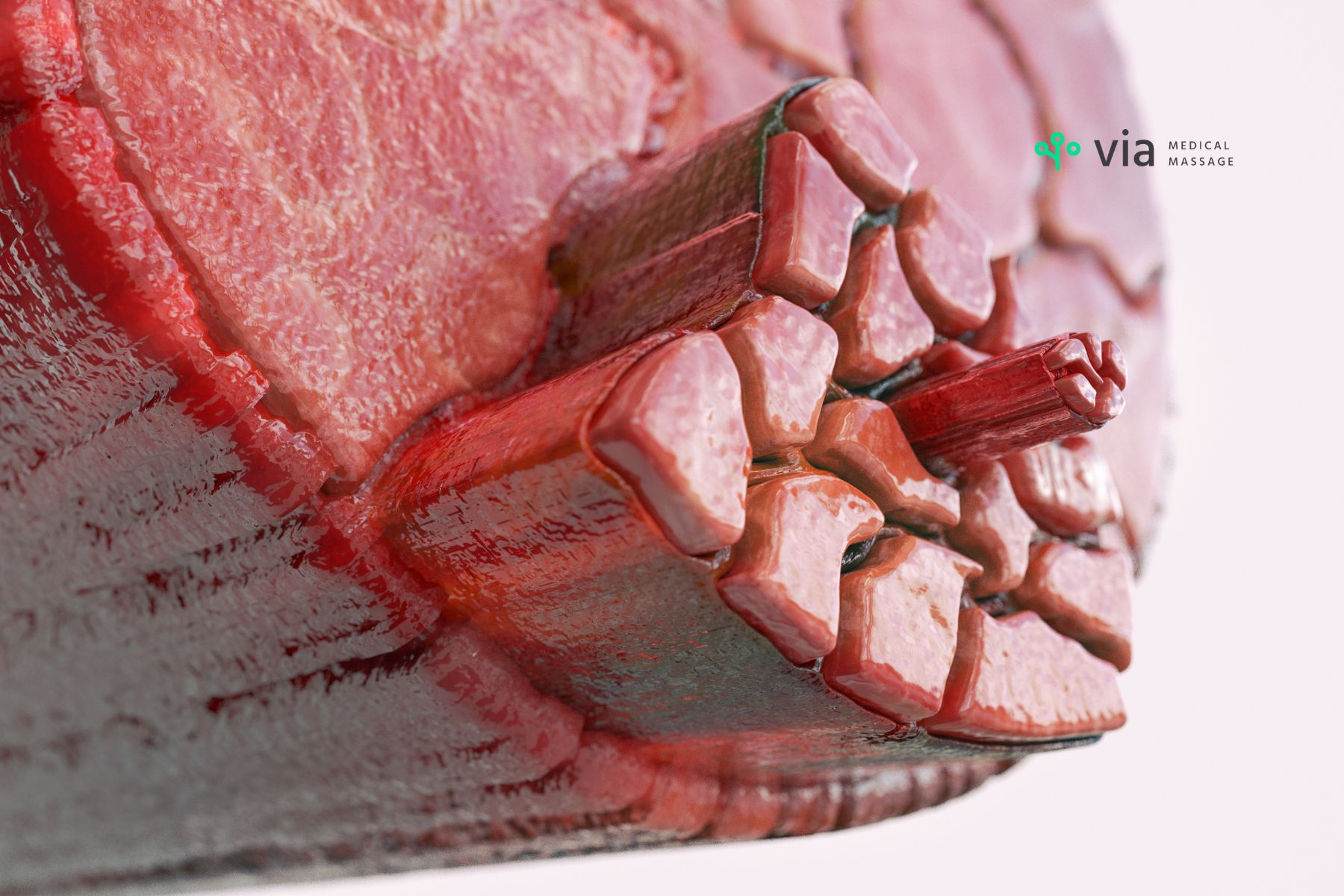
Muscle tissue is thick, fibrous, and elastic. It has a dense, layered texture designed to stretch and generate force. Healthy muscle should feel flexible and mobile, but overworked muscle can become tight, stiff, or knotted. Muscles also have a rich blood supply, which helps deliver oxygen and nutrients needed for movement and recovery.
What Nerves Do
Nerves act as the body’s communication network. Their job is to carry signals between the brain, spinal cord, muscles, skin, and organs. Every sensation, movement, reflex, and body response depends on nerves transmitting information properly.
Nerves are much more delicate than muscles. Instead of thick, fibrous tissue, nerves are soft, rope-like bundles made up of tiny fibers protected by connective tissue. Their structure is designed for transmitting electrical signals rather than producing movement or force.
Without nerves, muscles would not know when to contract, the brain would not receive sensory information, and the body would lose its ability to coordinate movement and respond to the environment.
Why Muscles and Nerves Need Each Other
Muscles and nerves are constantly working as a team. One cannot properly function without the other. While muscles create movement and stability, nerves provide the instructions and communication needed to make those actions happen.
Think of it like a lamp and electricity. The lamp might be perfectly built, but without power running to it, nothing happens. The same goes for muscles without healthy nerve signals.
Here’s how they depend on one another:
- Nerves tell muscles when to contract and relax
- Muscles rely on nerve signals for strength, coordination, and balance
- Nerves help the body detect movement, pressure, and position
- Muscles help protect and support nerves throughout the body
- Both systems work together to maintain posture and everyday movement
- The brain uses nerves and muscles together to create reflexes and quick reactions
This relationship is also why problems in one system can affect the other.
Why Muscle Pain and Nerve Pain Feel Similar
Muscle pain and nerve pain can feel similar because both can show up as deep, persistent discomfort that’s hard to pinpoint. In many cases, the pain also overlaps in the same areas of the body, especially the back, neck, shoulders, or hips, which makes it easy to assume a tight muscle is the only problem.
Another reason the two get confused is that muscle tension can sometimes irritate nearby nerves, and nerve problems can trigger muscles to tighten in response. That means a person may feel soreness, stiffness, or pressure even when the root cause is different. The key is to look at the type of pain, not just where it is.
Signs Your Chronic Pain is Muscle Related
Muscle pain is often tied to tension, overuse, strain, posture problems, stress, repetitive movement, or compensation from another injury. It can range from mild soreness to deep, stubborn tightness that seems impossible to stretch out.
Some common signs your pain may be muscle-related include:
- Aching, sore, tight, or stiff sensations
- Pain that feels localized to one area
- Tenderness when pressing on the muscle
- Knots or trigger points you can physically feel
- Pain that improves with stretching, movement, heat, or massage
- Symptoms that worsen after physical activity or poor posture
- Muscle fatigue, weakness, or cramping
- Reduced range of motion because the area feels “tight.”
Muscle pain often feels mechanical. Certain movements aggravate it, while others help relieve it. In many cases, the discomfort can be reproduced by touching or activating the affected muscle.
Signs Your Chronic Pain Is Nerve-Related
Nerve pain tends to feel different from muscular tension. Instead of soreness or tightness, it is often described as sharp, electric, burning, or strange in a way that is harder to explain.
Some common signs your pain may be nerve-related include:
- Burning, tingling, buzzing, or “pins and needles” sensations
- Sharp, shooting, or electric-like pain
- Numbness or reduced sensation
- Pain that travels along an arm, leg, or specific pathway
- Symptoms that worsen with certain neck or spine positions
- Muscle weakness without obvious muscle soreness
- Hypersensitivity to touch, temperature, or pressure
- Pain that does not improve much with massage or stretching alone
Nerve pain can also come and go unpredictably. Some people notice symptoms increase while sitting, coughing, reaching overhead, or staying in one position too long. Unlike muscle soreness, nerve irritation often follows the path of the affected nerve rather than staying isolated to one spot.
When Does Nerve Pain Feel Like Muscle Pain?
This is where things get confusing for a lot of people. Irritated nerves create symptoms that feel surprisingly muscular.
A compressed or irritated nerve can cause nearby muscles to tighten, guard, or spasm in response. That can create deep aching, stiffness, trigger points, or a constant “knot” feeling that seems muscular on the surface. In some cases, the muscle tension becomes so dominant that the underlying nerve issue gets overlooked.
For example:
- A nerve problem in the neck might create severe tightness around the shoulder blade or upper trap.
- Sciatic nerve irritation can feel like hamstring tightness or deep glute pain.
- Radial nerve issues can create deep aching or tightness around the shoulder, upper arm, forearm, or even near the elbow.
Some people spend months stretching or massaging an area that keeps tightening back up because the nerve irritation driving the problem never fully resolves.
Nerves and muscles are closely connected throughout the body, so it is common for chronic pain to involve both systems at the same time. That is one reason persistent pain can be difficult to self-diagnose without a proper evaluation.

When Does Muscle Pain Affect Nerves?
What starts as muscle pain can end up impacting your nerves, especially if left untreated. Tight, inflamed, swollen, or overworked muscles can place pressure on nearby nerves and begin creating symptoms that feel neurological instead of purely muscular.
This can happen gradually over time from repetitive movement, poor posture, injury, stress, compensation patterns, or chronic tension that never fully resolves. As muscles tighten and surrounding tissues become irritated, nerves may have less space to move freely through the body.
A few common examples include:
- Tight neck muscles contribute to tingling or pain down the arm
- Piriformis muscle irritation, placing pressure on the sciatic nerve
- Tight chest and shoulder muscles compressing nerves near the collarbone
- Forearm tension contributing to numbness or tingling in the hand and fingers
- Muscle spasms near the spine are creating pressure around nerve roots
This overlap is one reason chronic pain can become difficult to self-diagnose. The original problem may have started in the muscles, but nerve irritation can develop as the issue progresses.
How the Spine Impacts Muscles and Nerves
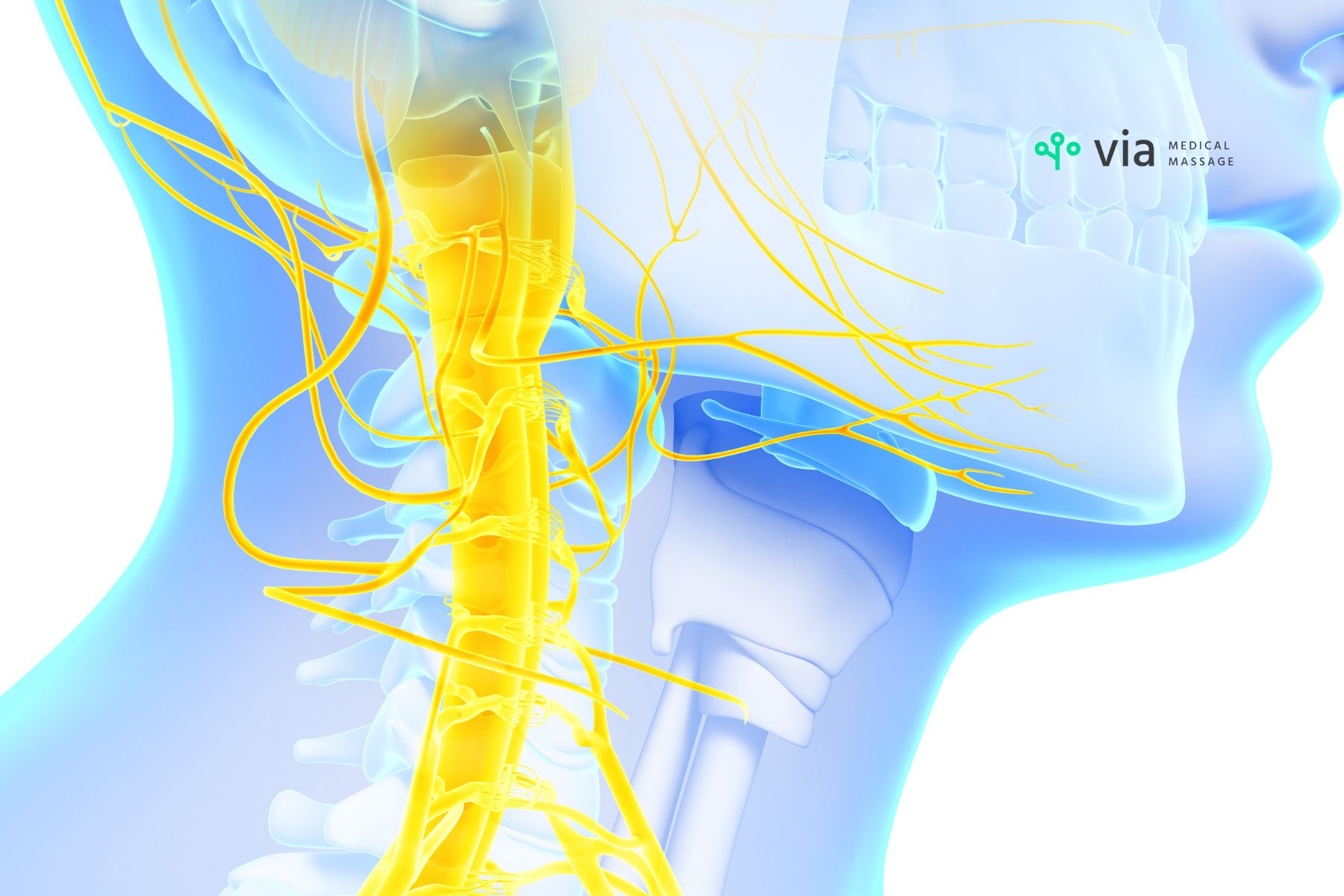
The spine plays a major role in both muscular and nerve-related pain because it acts as the body’s central support structure and communication highway. The spinal cord runs through the center of the spine, and nerves branch outward between the vertebrae to supply muscles, skin, and other tissues throughout the body.
At the same time, dozens of muscles attach to and support the spine itself. These muscles help stabilize posture, control movement, protect the joints, and absorb physical stress throughout the day.
When the spine is healthy and moving properly, muscles and nerves typically function together smoothly. However, problems involving posture, disc issues, arthritis, inflammation, injuries, or chronic tension can affect both systems at once. Tight muscles may pull unevenly on the spine, while spinal compression or irritation can affect nearby nerves and surrounding muscle function.
This is one reason pain in the neck or back does not always stay isolated to one location. Issues involving the spine can influence muscles, nerves, joints, and movement patterns throughout larger areas of the body.

Nerve Pain vs. Muscle Pain FAQs
Let’s get into some frequently asked questions to help with muscle pain or nerve pain.
Can you massage away nerve pain?
Sometimes. If tight muscles are compressing or irritating a nerve, medical massage may help reduce tension and relieve pressure on the area. However, massage cannot correct every nerve issue. Conditions involving herniated discs, significant compression, or nerve damage often require additional medical treatment. In some cases, aggressive massage can even worsen irritated nerves, which is why proper assessment matters.
What Is Nerve Flossing?
Nerve flossing, also called nerve gliding or nerve threading, involves gentle movements designed to help nerves move more freely through surrounding muscles and tissues. Unlike stretching a muscle, these exercises focus on improving nerve mobility and reducing irritation.
Because different nerve conditions require different movements, it’s important to see a healthcare provider or physical therapist to get the right exercises for your condition.
Can a Medical Massage Therapist Tell if Pain Is Muscular or Nerve-Related?
A medical massage therapist cannot officially diagnose medical conditions, but they are trained to recognize patterns that may suggest muscular tension, nerve involvement, or a combination of both. A medical massage therapist may recommend evaluation by a physician or specialist. This is one reason that we at Via Medical Massage believe in having a community of healthcare specialists collaborating together for overall wellness.
How Does Posture Impact Nerves and Muscles?
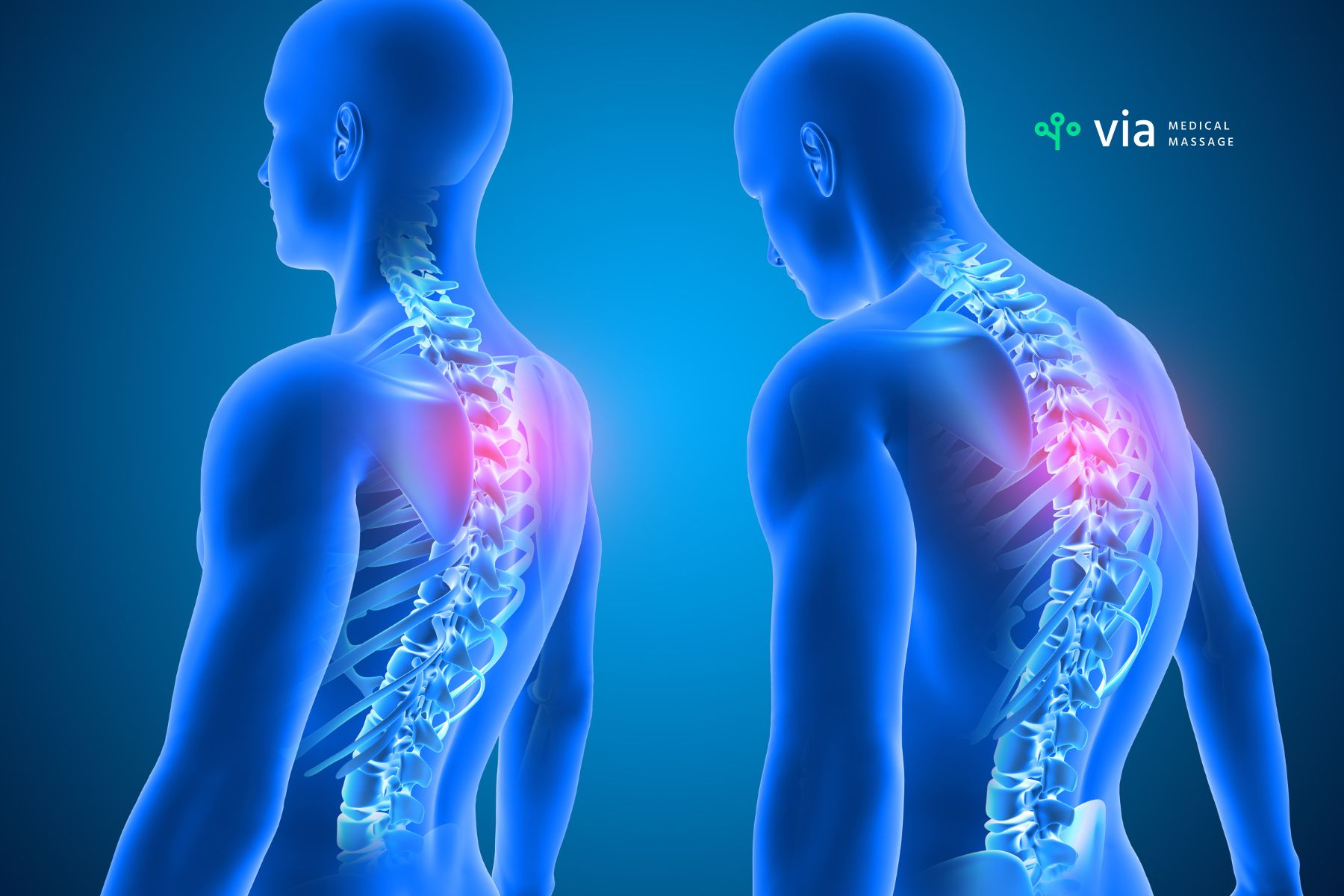
Poor posture can place extra stress on muscles, joints, and the spaces where nerves travel through the body. Over time, slouching, forward head posture, rounded shoulders, or prolonged sitting can create tension and compression that irritates nearby nerves.
For example, tight chest and neck muscles from poor posture may contribute to tingling or discomfort down the arm, while prolonged pressure in the lower back and hips can aggravate nerves traveling into the legs. Posture problems do not always directly “cause” nerve pain, but they can absolutely contribute to irritation and chronic symptoms over time.
When to Seek Help for Nerve or Muscle Pain
Sometimes, sore muscles, mild strains, or temporary irritation improve with rest, ice, heat, gentle stretching, hydration, or over-the-counter anti-inflammatory medication. Giving your body time to recover after overuse or poor sleep posture is often enough for short-term discomfort.
However, chronic pain is different. If symptoms keep returning, worsen over time, interfere with sleep, limit movement, or affect your daily life, it may be time to seek professional help instead of trying to push through it.
Medical massage therapy can be a good starting point for muscular tension, postural problems, mobility restrictions, and stress-related tightness. In some cases, massage may also help relieve nerve irritation caused by surrounding muscle tension and compression.
Depending on your symptoms, starting with a primary care provider, orthopedic specialist, neurologist, physical therapist, or medical massage therapist may all make sense. The important thing is recognizing when pain has moved beyond a temporary annoyance and started affecting your quality of life.
Whether you want to book a massage or get local recommendations in Lincoln or Omaha for a healthcare provider that can help with your chronic pain, Via Medical Massage believes you when you say you’re in pain. We’ll help you get the healing touch you need. Get in touch with us today.