

Ashiatsu barefoot massage is the newest service available at Via Medical Massage, but it represents something much bigger than a new item on our menu. Our therapists are constantly investing in continuing education, learning new techniques that help us better treat pain, improve mobility, and meet clients where they are in their healing journey.
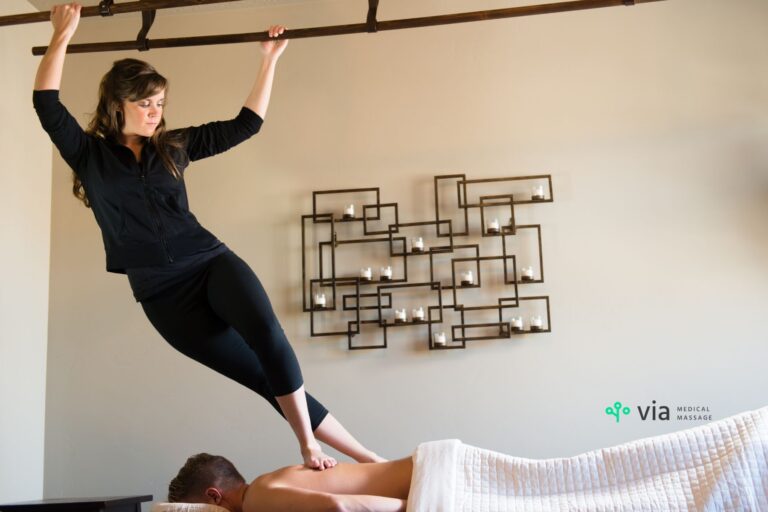
Simply put, ashiatsu barefoot massage is a massage technique that uses the therapist’s feet instead of their hands, with overhead support bars allowing them to control their balance, pressure, and movement throughout the session.
In fact, ashiatsu came to Via after one of our own therapists experienced the technique firsthand, called it an “out-of-this-world experience,” and knew our clients needed the opportunity to experience it, too.
We get it — the idea of a therapist “walking on your body” probably raises a few questions, and that’s exactly why we put together this guide. From what it feels like to who it’s best for, here’s what you can expect from your first Ashiatsu Barefoot Massage session.
What Is Ashiatsu?
The word ashiatsu (ah-shee-AHT-soo) comes from Japanese, with ashi meaning “foot” and atsu meaning “pressure.” It’s also shortened to be simply called Ashi (ah-shee). This practice dates back at least 2,000 years.
Ashiatsu is a massage technique that uses the therapist’s feet to apply slow, controlled pressure while holding overhead bars for balance and precision. Rather than “walking” on you, the therapist uses the bars to carefully shift their body weight, adjusting the amount of pressure throughout the session.
Long, gliding strokes typically begin around the shoulders and back before moving to the hips, glutes, legs, and feet. Depending on your treatment plan, the therapist may also work on the shoulders, arms, or other areas of concern, delivering broad, even pressure that’s difficult to achieve with hands alone.
“During an Ahsi massage, I can cover a much larger area of tension with my foot than I could with my hands or elbow,” Courtney Johsnon, LMT at Via Med Massage, said. “Just shifting my body a few inches means improved pressure that hands-on massage can’t achieve.”
Ashiatsu vs. Shiatsu
At first glance, the names are almost identical. They’re both inspired by Japanese traditions, but they are two very different types of bodywork.
- Ashiatsu (足圧): ashi = foot and atsu = pressure. It literally translates to “foot pressure.”
- Shiatsu (指圧): shi = finger and atsu = pressure. It literally translates to “finger pressure.”
Shiatsu focuses on applying pressure to specific points throughout the body, usually with the therapist’s fingers, thumbs, palms, or elbows. Sessions are often performed with the client fully clothed and emphasize the body’s natural energy pathways, known as meridians.
When you opt for ashiatsu massage, you’re going for long, flowing strokes and broad, even pressure to work through large muscle groups from the therapist’s feet. They leverage body weight to get the pressure just right.
What to Expect During an Ashiatsu Massage Session
From the client’s perspective, an ashiatsu session feels surprisingly familiar. You’ll undress to your comfort level, get settled on the massage table, and remain professionally draped throughout the appointment, just as you would during a traditional massage.
The first thing you’ll probably notice is a set of overhead support bars securely mounted above the massage table. These bars aren’t for you. They allow the therapist to maintain balance, control their body weight, and precisely adjust the amount of pressure they apply throughout the session.
That’s where things get interesting.
Instead of relying primarily on their hands, your therapist uses their feet to perform slow, flowing strokes over larger muscle groups while using the overhead bars to stay stable. The bars let them shift more or less of their body weight as needed, creating a customized pressure that’s often described as deep without feeling sharp or overly intense.
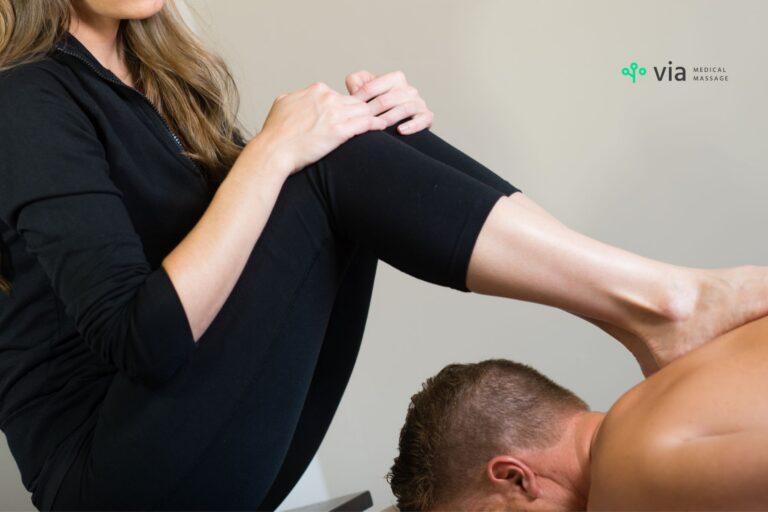
Even when it comes to treating the shoulders, neck, and chest, the therapists will sit on a stool and use their feet to work high-tension areas.
Throughout the ashiatsu session, your therapist will check in with you to make sure the pressure feels comfortable, adjusting their technique based on your needs and treatment goals.
Is Ashiatsu Right For Me?
The barefoot massage technique is especially well-suited for people who enjoy deep tissue massage but prefer broad, consistent pressure over the sharper feeling that can come from thumbs, knuckles, or elbows.
Many clients who benefit from Ashiatsu include:
- People with chronic muscle tension or stiffness
- Athletes and active adults recovering from workouts
- Those with tight hips, glutes, hamstrings, or back muscles
- People who spend long hours sitting at a desk or standing at work
- Clients with larger muscle groups who often feel that traditional massage doesn’t provide enough pressure
- Anyone looking to improve flexibility, mobility, and overall muscle function
“As a medical massage therapist, my body needed relief that went well beyond traditional massage after a long week of work,” Johnson said, adding, “It quickly became my go-to massage because it was an out-of-this world experience. I just knew I had to get trained in this practice and bring it to Via Medical Masage.”
That doesn’t mean ashiatsu is only for people who want the deepest massage possible. Because the therapist controls their body weight using the overhead support bars, the pressure can be adjusted to match your comfort level and treatment goals.
During your consultation, your therapist will discuss your health history, areas of concern, and whether Ashiatsu is the best approach for your body.
Who Should Avoid Ashiatsu Massage
Like any therapeutic massage, Ashiatsu isn’t the right choice for everyone. Because it uses deeper pressure across larger muscle groups, some health conditions require a different approach or clearance from your healthcare provider first.
You should talk with your therapist before scheduling an Ashiatsu session if you have:
- A recent surgery or are still healing from a procedure. A post-surgical massage session would be better for you.
- A recent injury, fracture, or sprain
- Severe osteoporosis or fragile bones
- A blood clotting disorder or a history of blood clots
- An acute inflammation or active infection
- Open wounds, burns, or skin conditions in the treatment area
- An active pregnancy. A prenatal massage is ideal for anyone going through pregnancy, with their healthcare provider’s approval.
- Uncontrolled high blood pressure or other serious cardiovascular conditions
A consultation is always part of the process. Your therapist will review your health history, discuss your goals, and recommend the safest and most effective treatment. In some cases, that may be ashiatsu. In others, another massage technique may be a better fit until your body is ready.
Ashiatsu Massage FAQs
Will the therapist be barefoot?
Yes. Ashiatsu therapists work with clean, sanitized bare feet. The broad surface of the foot allows for smooth, even pressure, while the therapist uses overhead support bars to maintain balance and precisely control how much pressure is applied.
I have a thing about feet. Is Ashiatsu still for me?
First of all, you’re not alone. This is a common question. Ashiatsu therapists clean and santize their own feet and yours. Most first-time clients say their initial hesitation disappears once the massage begins because the technique feels so different from what they expected. Considering you’ll be in a state of relaxation with your eyes closed or facing down, you won’t even realize how the massage is being performed, just that it feels amazing.
Is Ashiatsu deeper than a traditional massage?
It can be. Because therapists use their body weight instead of muscle strength alone, they can often provide deeper, more consistent pressure with less discomfort. It’s just not as targeted as something like a trigger point-focused massage would be. Yet, ashiatsu can still deliver trigger point release.
How do I prepare for an ashiastsu massage?
The preparation is the same as it would be for any massage. Try not to eat a large meal immediately beforehand, but don’t arrive hungry either. Drink plenty of water before your appointment so your muscles are well hydrated, and continue drinking water afterward.
Will I be sore after an ashiatsu massage?
Some people experience mild soreness for a day or two, especially if they’ve had significant muscle tension or haven’t received deep bodywork in a while. Drinking water, gentle stretching, and light movement can help your body recover. We’ve also put together a great post-massage shopping list to help reduce any discomfort.
How long is an ashiatsu massage?
While Ashiatsu can be incorporated into shorter sessions, we typically recommend 90- or 120-minute appointments for the best results. The additional time allows your therapist to work through multiple muscle groups without rushing, giving your body a chance to fully relax and respond to the broad, therapeutic pressure that makes Ashiatsu so effective.
Are You Ready to Try Ashiatsu Barefoot Massage?
If you’re ready to discover why so many people describe Ashiatsu as unlike any massage they’ve experienced before, we’d love to help you experience it for yourself.
Ashiatsu Barefoot Massage will be available at Via Medical Massage starting August 1, 2026, at our East Lincoln location. We have two therapists trained in this specialized massage and two rooms to offer more appointment times. Whether you’re dealing with chronic muscle tension, recovering from an active lifestyle, or simply looking for a different approach to deep tissue massage, our specially trained therapists are ready to help.
You can check the booking calendar 24/7 to find a time to experience an ashiatsu massage in eastern Nebraska.