

If you’ve ever had a massage, you’ve likely heard your therapist refer to the fascia in your body. Whether you didn’t want to ask or were too relaxed in your massage haze, it’s important to understand how fascia works, why it helps, when it hurts, and how to treat it like the rockstar body part it truly is.
In this article, we want to explore what fascia is in a way that makes more sense than your standard Wikipedia page. It’s also important to know how the tissue can refer pain, how it differs from muscles, yet still plays in the same sandbox to cause those painful problems that likely brought you to a massage therapist in the first place.
Fascia: The Basics
Before we can talk about the importance of fascia, we need to explore what it is and how it works.
Fascia’s Job: Keep It Together
Technically, fascia is connective tissue. But that’s a pretty boring term. It’s easy to say that fascia is the tissue that holds our body together. It keeps all the organs, muscles, and bones in place.
Remember the push puppet toys from decades ago? The ones where you push a button on the bottom, and the toys collapse down? That’s fascia. If your body fascia vanished suddenly, you would crumble to the ground in a big skin-covered pile.
Also, think of it like a bowl of cooked spaghetti. It stays together because of the bowl, but if you tried to keep it together without the container, the noodles would just fall everywhere.
Fascia Specifics
For years, fascia was dismissed as ‘just connective tissue.’ Now, many experts see it as a dynamic body-wide system that behaves a lot like an organ. The difference? Unlike the heart or kidneys, fascia isn’t one neatly packaged structure. It’s a continuous web woven through nearly your entire body.
This body-wide network can:
- Tighten and adapt somewhat like a muscle
- Sense pain and tension through thousands of nerve endings
- Communicate with the nervous system
- Transfer force and movement across the body
- Support posture and stability
- React to stress and injury
- Affect flexibility, mobility, and recovery
- Create “chain reaction” pain patterns throughout the body
Fascia accounts for anywhere from 10% – 20% of your body weight.
The tissue varies dramatically in thickness and texture throughout the body. Some layers are so thin and transparent they resemble spiderwebs, while deeper fascia in high-stress areas like the lower back, hips, and feet can become several millimeters thick. Thicker areas feel more like leather or dense fabric.
What makes fascia different from delicate Saran Wrap is that fascia is built from incredibly strong biological fibers, primarily collagen and elastin. Some layers appear thin and almost transparent. At the same time, fascia is designed to stretch, support, absorb force, and resist tearing under constant movement and pressure.
Lifestyle Impacts on Fascia
Fascia constantly responds to how you live. Movement, hydration, posture, stress, sleep, injuries, and repetitive habits all affect how flexible or restricted it becomes.
Healthy fascia stays hydrated, elastic, and able to glide smoothly between tissues. Inactivity, chronic stress, poor posture, repetitive movement, surgery, and inflammation can cause fascia to stiffen, tighten, or feel “stuck.”
Fascia helps hold your body together and supports alignment, but it does not magically force perfect posture or movement patterns. If you spend hours slouched over a laptop, carrying stress in your shoulders, or repeating the same movements every day, fascia adapts.
Obesity places extra physical and inflammatory stress on fascia. As body weight increases, fascia must manage greater tension and pressure throughout the body, especially around the hips, knees, feet, lower back, and abdomen. Over time, this can contribute to stiffness, discomfort, and reduced mobility.
At the same time, rapid weight loss, including weight loss associated with GLP-1 medications, can affect fascia as the body quickly adapts to changes in weight, posture, movement, and tension patterns. Some people notice tightness, soreness, stiffness, or unfamiliar sensations as connective tissues adjust to supporting a changing body.
Fascia: Sticky or Slick?
Fascia is naturally somewhat slippery and gel-like, so tissues can glide smoothly against each other during movement. That “sticky” feeling happens when the fascia loses some of that healthy mobility and hydration.
Researchers believe factors like inflammation, injury, stress, repetitive movement, poor posture, surgery, inactivity, dehydration, and even chronic tension can change the consistency of the fluid within fascia. Instead of gliding smoothly, tissues may begin to feel stiff, dense, restricted, or almost glued together.
One important component is something called hyaluronan (aka the buzzworthy “hyaloronic acid”), a slippery substance found within fascial layers. Healthy hyaluronan helps tissues slide and move easily. But when fascia becomes irritated or dehydrated, that substance may become thicker and less fluid, contributing to the sensation of “sticky” or restricted tissue.
Fascia’s Importance During Surgery
Fascia plays a major role in surgery because surgeons often have to cut through or work around fascial layers to reach muscles, joints, or organs. The layers of fascia often act like natural anatomical maps, separating muscles, organs, nerves, and blood vessels. Understanding those layers helps surgeons choose safer incision sites, reduce tissue damage, and lower infection risk.
- Tummy tucks often involve tightening fascial layers that support the abdominal wall.
- Breast augmentation requires surgeons to carefully work through fascial planes around muscles and tissue.
- Mommy makeovers can affect multiple fascial areas at once during combined procedures.
- Orthopedic surgeries use fascial layers to help access joints, muscles, and tendons.
- C-sections involve moving through and repairing several layers of fascia.
- Reconstructive surgeries may use fascia itself to help support repaired areas.

Which Causes Pain? Muscle or Fascia?
The answer is often both. Muscles and fascia are deeply connected, which means pain and tension rarely stay isolated to just one tissue. Tight muscles can pull on fascia, while restricted fascia can limit movement, create pressure, and irritate surrounding muscles and nerves.
Researchers now know fascia contains a large number of sensory nerves and pain receptors, meaning fascia itself can generate pain and sensitivity, not just the muscles underneath it. At the same time, overworked or injured muscles can create tension patterns that affect the surrounding fascia. The two systems constantly influence each other.
How Fascia Issues Show Up
Because fascia connects tissues throughout the body, tension in one area can gradually pull other areas out of alignment as compensation patterns develop. We tend to blame our traps or calf muscles, but in reality:
- That “knot” in your shoulder may actually involve tight chest muscles and fascia pulling the shoulders forward.
- Text neck develops when fascia and muscles adapt to constantly looking down at phones and screens.
- Rounded shoulders often form from tight fascia across the chest, combined with weakened upper back muscles.
- Tight hips can pull on fascial chains connected to the lower back, contributing to stiffness and pain.
- Jaw clenching and stress can create fascial tension that spreads into the neck, shoulders, and even headaches.
- Sitting all day can cause the fascia around the hips and hamstrings to stiffen and lose mobility.
Yoga helps keep fascia moving and adaptable through stretching and full-body movement patterns. Foam rolling may help improve tissue glide and reduce feelings of tightness. Massage therapy can target both muscle tension and fascial restrictions. Strength training helps support the entire system so that the body moves more efficiently overall.

Working with Fascia During a Massage
Going back to the start of the article, you might hear your Via Medical Massage therapist talk about the fascia in your body.
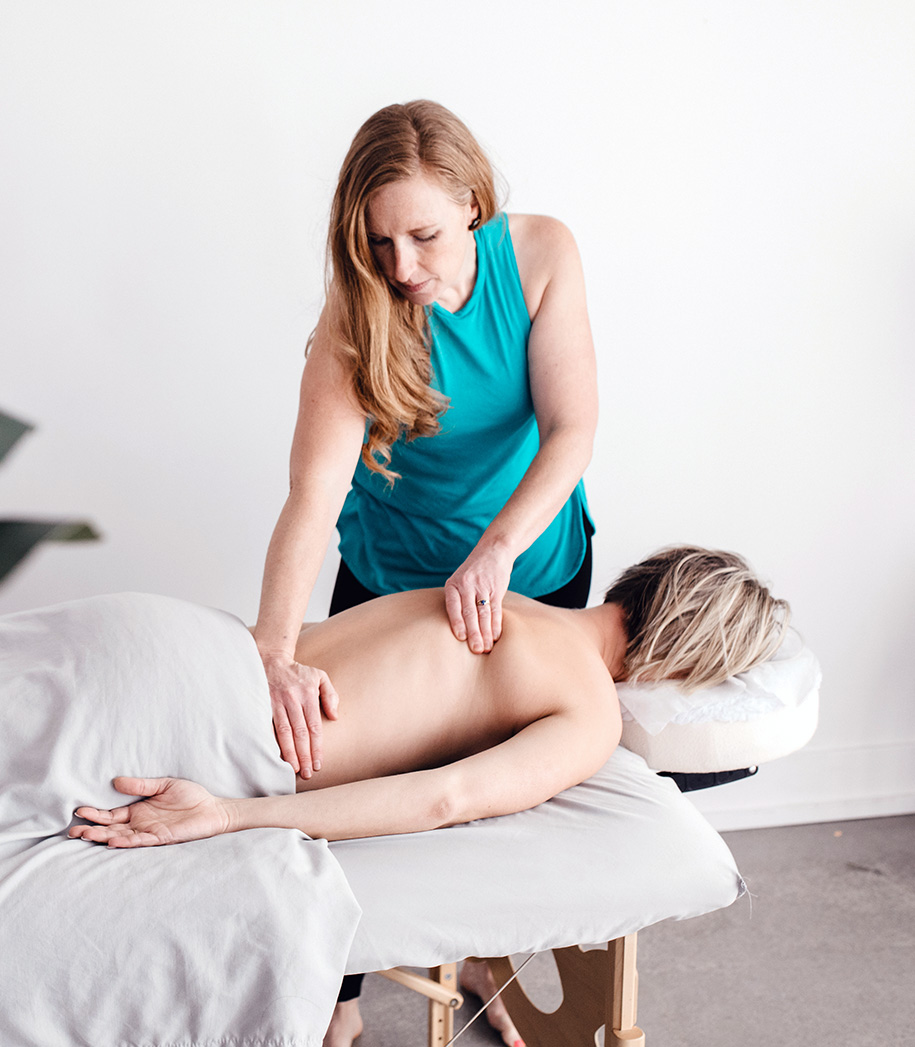
That slower hands-on contact at the beginning of a session, especially when a therapist places broad pressure on the body or slowly glides over areas without immediately digging into muscles, is often part of evaluating the fascial system.
Therapists may be feeling for temperature differences, tissue drag, stiffness, hydration, asymmetry, restricted movement, or areas where the skin and underlying tissues do not glide normally.
Long, slow stretching movements during massage are often aimed more at fascia and tissue mobility. Fascia responds better to gradual, sustained tension rather than fast, aggressive movements. Sustained direct pressure is commonly used for trigger points and muscle tension.
Fascia Remembers What Your Body Repeats
One reason we often recommend regular massage therapy is that the body loves patterns, even unhealthy ones. Tight shoulders, text neck, jaw tension, poor posture, old injuries, stress, and repetitive movement can all create long-term muscle and fascial patterns that the body slowly adapts to over time.
While everyone has fascia, no two bodies respond exactly the same way. That’s why Via Medical Massage does not believe in cookie-cutter massage sessions or one-size-fits-all pressure. Every session is customized to your body, movement patterns, fascia, muscles, tension levels, and overall wellness goals.
Book a session today in Lincoln or Omaha. We can usually cater to last-minute appointments. Let us help listen to your body and give it what it needs so you can live your best life.