

Most of us have experienced that stubborn, nagging shoulder blade knot that refuses to go away, no matter how much stretching, foam rolling, or massage you throw at it. The trapezius muscles, better known as the traps, get a lot of blame because the pain is often felt in that area.
To be fair, the traps are often involved in the shoulder knot nightmare. But that doesn’t always mean they’re the root cause. As one of the largest muscle groups in the upper back, shoulders, and neck, the traps often end up compensating for other muscles that are weak, tight, or irritated.
That’s why constantly digging into your traps can keep you stuck in the same cycle of pain and stiffness. Muscles from your neck to the nook of your armpit are all secretly working to ensure you blame the trapezius. Let’s call them out.
First, Let’s Talk About the Traps
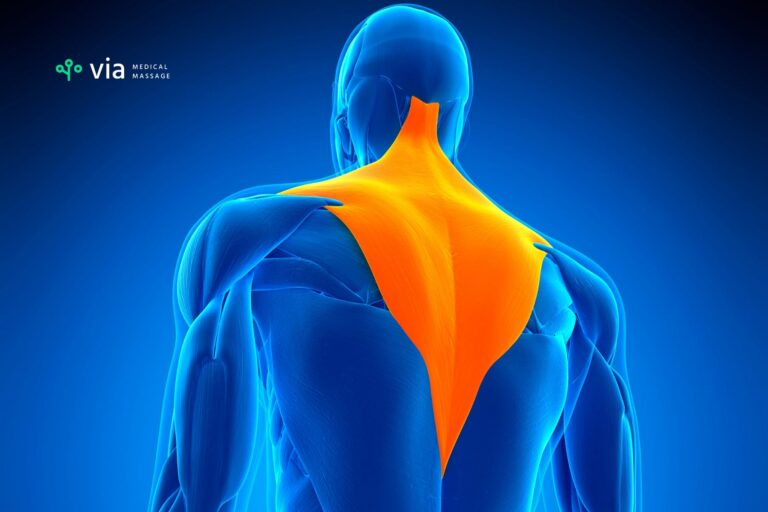
The trapezius muscle is so large that it’s divided into three sections. They all work together to stabilize the shoulders, support posture, and help the neck and shoulder blades move smoothly. When one section gets overloaded or another muscle stops pulling its weight, the traps often step in to compensate.
- Upper trapezius: The upper traps help elevate the shoulders and support neck movement. They tend to flare up during stress, poor posture, long desk hours, driving, and anytime you spend half the day unconsciously shrugging your shoulders toward your ears.
- Middle trapezius: The middle traps help pull the shoulder blades back toward the spine. Weak posture muscles, rounded shoulders, repetitive reaching, and too much time hunched over a phone or keyboard can overload this area.
- Lower trapezius: The lower traps help stabilize and rotate the shoulder blades during overhead movement. Weak lower traps can force the upper traps to work overtime, especially during lifting, workouts, or repetitive arm movements.
Because the traps connect the neck, shoulders, and upper back, problems in one area can easily ripple into another.
10 Muscles That Can Trigger Shoulder Blade Knots
The upper back and shoulder area is packed with muscles that all work together in tandem with the traps. When one stops doing its job, another muscle picks up the slack. The knot you feel in your traps may actually be coming from somewhere else entirely. Plus, trigger points can form, causing more pain.
Add in the modern-day human habits of staring down at a phone or poor posture at a computer, and we’re giving the traps extra work while letting too many other muscles off the hook. Here are the 10 muscles to test for scapula pain.
Levator scapulae
If your shoulder knot seems to climb into your neck, the levator scapulae may be involved. This muscle sits along the back and side of the neck, attaching to the top inner corner of the shoulder blade. Touch that upper inside edge of the scapula and trace upward toward the neck to find it. Its job is to lift and stabilize the shoulder blade, but stress, poor posture, and staring down at screens can overload it fast. Sharp pain near the top of the shoulder blade is a common giveaway.
Rhomboids
Buried between the spine and shoulder blades, the rhomboids are posture muscles that rarely get attention until they start aching. Reach across your chest and feel along the inner edge of the scapula closest to the spine. These muscles help pull the shoulders backward and keep the upper back stable. Long desk hours and rounded shoulders can leave them irritated and tight. If a massage ball against the wall feels oddly terrible in this area, you may have found the culprit.
Latissimus dorsi
Better known as the lats, these broad muscles run along the back and sides of the body from the mid-back into the upper arm. Reach below the armpit along the side of the rib cage to feel the upper portion. The lats help control pulling and overhead movement, but tightness here can alter shoulder mechanics and strain nearby muscles. Limited overhead reach is often a clue. Pull-ups, swimming, rowing, and heavy lifting commonly flare them up.

Infraspinatus
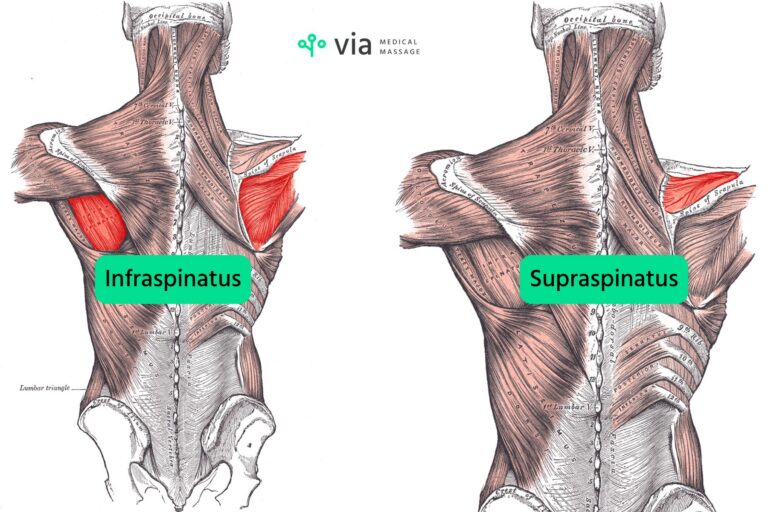
Covering much of the back of the shoulder blade, the infraspinatus is one of the biggest referral pain troublemakers in the upper back. It sits below the bony ridge across the scapula and helps rotate and stabilize the shoulder. Place your hand flat on the back of your shoulder blade and move slightly downward to locate it. Trigger points here often send pain into the shoulder blade, arm, or front of the shoulder. A massage ball usually finds the tender spots quickly.
Supraspinatus
Perched along the top of the shoulder blade, the supraspinatus helps lift the arm and stabilize the shoulder joint. To find the area, touch the top portion of the scapula above the bony ridge near the shoulder. This small rotator cuff muscle is heavily involved in overhead movement and commonly becomes irritated from lifting, reaching, or repetitive shoulder use. Pain often shows up near the top of the shoulder and can spread toward the shoulder blade or traps.
Teres Major and Teres Minor
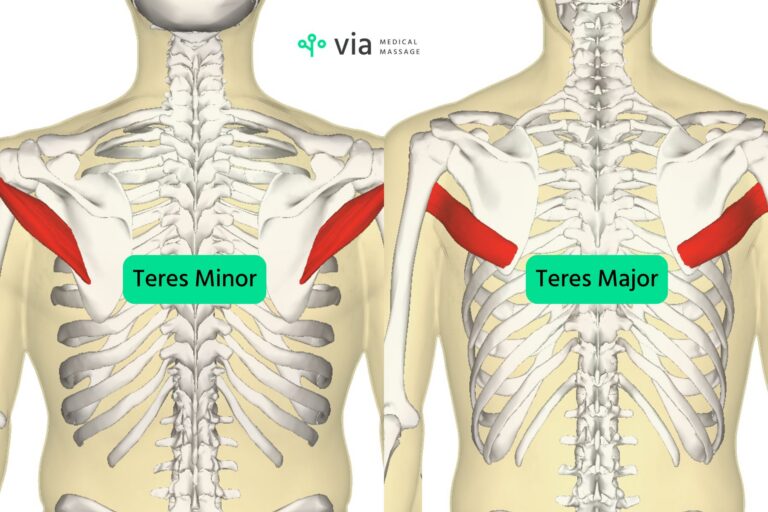
Small, secluded, but often sore, the teres major and minor sit along the outer edge of the shoulder blade near the back of the armpit. Reach behind your shoulder and feel just below the back of the shoulder joint. These muscles help rotate and stabilize the shoulder, especially during lifting and overhead movement. Tightness here can create deep pain that mimics a trap knot. Throwing motions, rowing, and repetitive reaching commonly aggravate them.
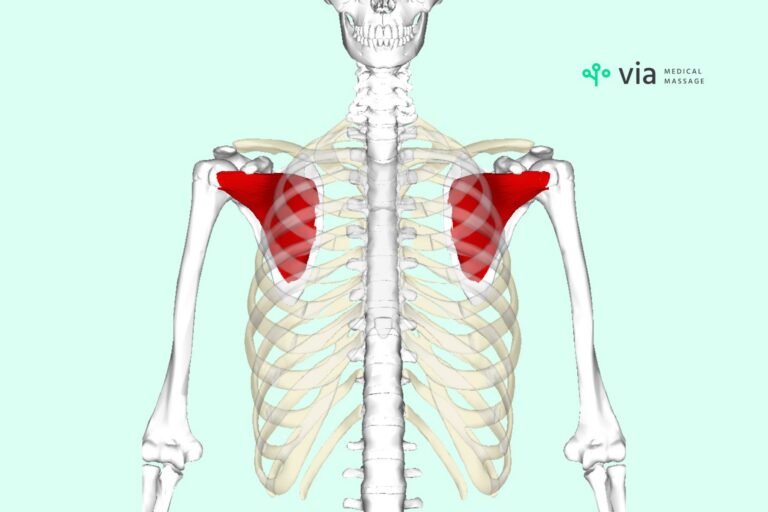
Subscapularis
Hidden underneath the shoulder blade itself, the subscapularis is difficult to access but surprisingly influential. This muscle sits on the front side of the scapula against the rib cage and helps stabilize and rotate the shoulder joint. Because it’s buried deep, people often feel the symptoms before they realize the muscle exists. Restricted overhead movement or pain reaching behind your back can point toward subscapularis tension. Professional massage work is often more effective than trying to release it yourself.
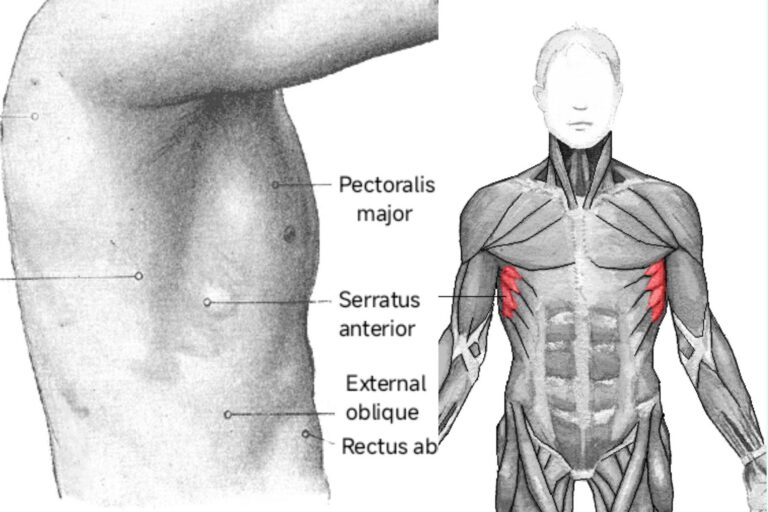
Serratus anterior
Wrapped around the side of the ribs beneath the armpit, the serratus anterior acts like an anchor for the shoulder blade. Run your hand along the side of your rib cage below the armpit to find the area. This muscle helps keep the scapula stable during arm movement. When it becomes weak or irritated, the traps and neck muscles often take over. Pain may show up along the ribs, shoulder blade, or upper back during pushing or overhead movements.
Pectoralis minor
If you’ve ever wondered why your medical massage therapist is working your chest to relieve back pain, it’s likely due to the pecs. Despite causing upper back tension, the pectoralis minor actually lives on the front of the body underneath the chest muscles. Place your fingers just below the collarbone and slightly inward from the shoulder joint to feel the area. This muscle helps stabilize the shoulder blade, but tightness can pull the shoulders forward and overload the upper back. Desk posture is a common trigger. If your shoulders naturally round inward, this muscle may be quietly fueling your shoulder knot.

Deltoids “The Delts”
Our search for the shoulder knot culprit now reaches the rounded part of the shoulder. While one muscle group, “The Delts,” has three parts.
- Anterior Deltoid (Front): Responsible for lifting your arm forward and rotating it inward.
- Lateral Deltoid (Middle/Side): Responsible for lifting your arm out to the side.
- Posterior Deltoid (Back): Responsible for pulling your arm backward and rotating it outward
Of the three, the posterior deltoid is the most likely to contribute to shoulder blade knots and upper back tension. Located on the back of the shoulder where the shoulder cap meets the upper arm, it works closely with the rotator cuff and upper back muscles during pulling, lifting, and stabilizing movements.

Massage Can Release the Knot. Your Lifestyle May Be Rebuilding It.
Massage therapy can help release tension, improve mobility, and calm irritated muscles. It can also interrupt the compensation patterns feeding your shoulder blade knot. But muscles and fascia can only adapt to the environment you give them.
If you spend hours hunched over a laptop, scrolling on your phone in bed, clenching your jaw during stress, or carrying tension in your shoulders all day, the knot often comes right back. That does not mean the massage failed. It means your body returned to the same patterns that caused the irritation in the first place.
Long-term relief usually requires more than chasing the knot itself. At Via Medical Massage in Lincoln and Omaha, we’ve put together an Amazon storefront of products that can help between massages.
Shop the Via Med Massage Amazon Storefront for Stretching Tools
We don’t expect clients to know every muscle group, but we hope articles like this help you understand why pain happens (or happens again and again). To that end, we also want to arm you with tools to help keep these muscles toned and stretched in between massage sessions.
Shop our stretching tools board for the tools we recommend as medical massage therapists.
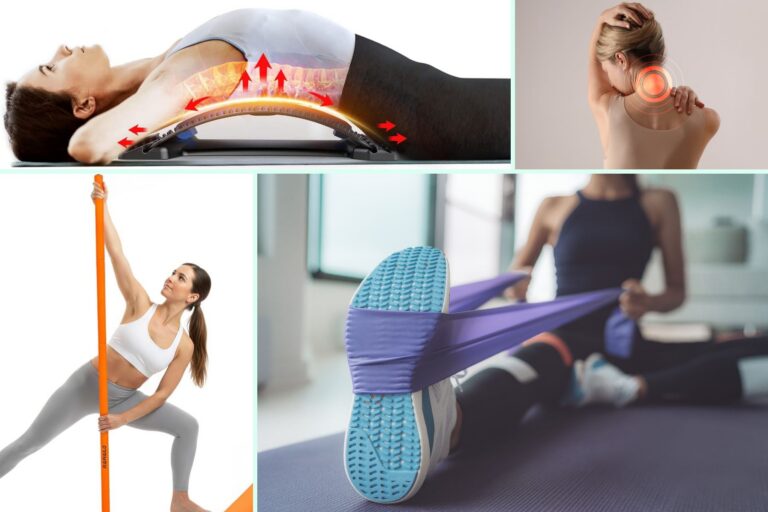
As an Amazon affiliate, we might earn a commission on qualifying purchases at no extra cost to you. We only recommend products we believe in.
Start Unraveling that Shoulder Blade Knot Today
Shoulder blade knots rarely develop overnight. Most build over time through stress, posture, repetitive movement, muscle imbalances, and daily habits. That’s why one massage session can help tremendously, but regular massage therapy often creates the biggest long-term changes.
Plus, if you see the same therapist, they can help track patterns, sense tension, and work the problem before it becomes (more) painful. At Via Medical Massage, we focus on identifying the muscles and movement patterns contributing to your discomfort instead of simply chasing the spot that hurts.
Schedule a massage today at one of our two locations in Lincoln or our Omaha (Elkhorn) office.