

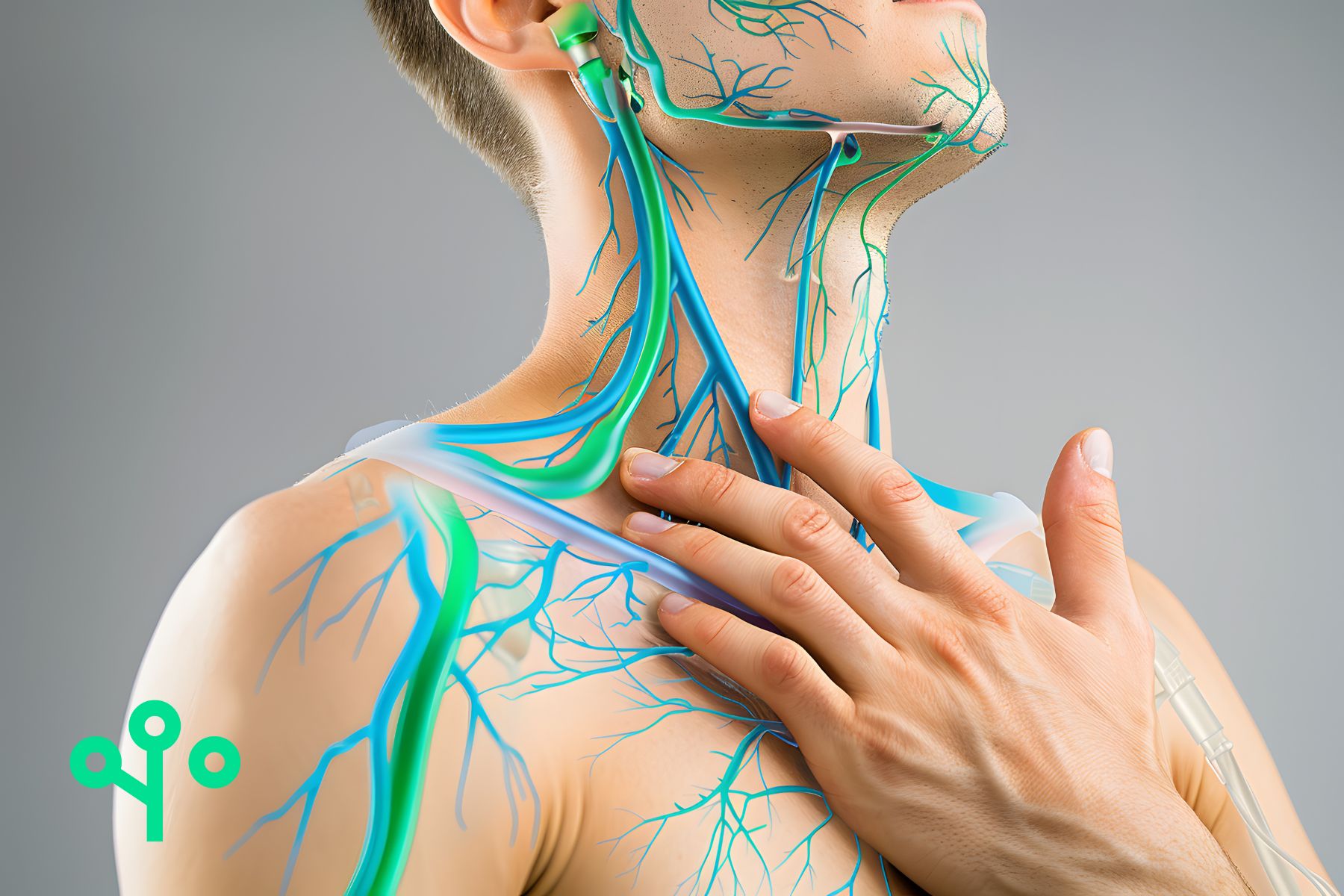
The lymphatic system is one of those parts of the body most people don’t think about until something goes wrong. It runs quietly in the background, moving fluid, fighting infection, and keeping tissues balanced.
When it slows down, after surgery, illness, or even a long period of inactivity, you feel it in the form of swelling, heaviness, or fatigue. It’s important that you understand how your lymphatic system works and its purpose.
Once we get down the basics of how the lymphatic system works, we can talk more about the benefits of manual lymphatic drainage massage (MLD).
Understanding Lymphatic Terminology
To better understand this article, it will help to know the basic terminology associated with how the lymphatic system works.
- Lymph – A clear fluid that carries white blood cells, proteins, fats, and waste products through the lymphatic vessels.
- Lymphatic capillaries – Tiny, open-ended vessels found throughout the body that collect extra fluid from tissues. This fluid becomes lymph and then enters larger lymphatic vessels.
- Lymphatic vessels – Thin tubes that transport lymph throughout the body, similar to veins in the circulatory system.
- Lymph nodes – Small, bean-shaped filters that trap bacteria, viruses, and other unwanted materials before they re-enter the bloodstream.
- Thoracic duct – The largest lymphatic vessel, running from the abdomen up through the chest to the left side of the neck. It’s responsible for draining lymph from most of the body back into the blood.
- Right lymphatic duct – A smaller vessel on the right side of the chest that drains lymph from the right arm, right side of the chest, and right side of the head and neck into the bloodstream.
- Interstitial fluid – Fluid that surrounds your body’s cells; when collected by lymphatic vessels, it becomes lymph.
- Edema – Swelling caused by a buildup of fluid in tissues when the lymphatic system can’t keep up.
- Manual lymphatic drainage (MLD) – A specialized massage technique using light, rhythmic strokes to encourage lymph movement.
Keep those terms handy, as they might help as you progress through this article.
What Is the Lymphatic System?
The lymphatic system is your body’s hidden highway, a network of tiny vessels, filters, and organs that prevents fluid from piling up where it does not belong. Instead of carrying blood, it moves a clear liquid called lymph.
That fluid collects extra water, proteins, and waste from your tissues and carries it toward lymph nodes. Think of those nodes as the TSA of your body, checking every bit of “lymph baggage” for bacteria, viruses, or anything suspicious before it gets cleared to move on.
Once the fluid passes inspection, it continues on its trip until it reenters your bloodstream, where it can be recycled. The bad baggage, like germs or damaged cells, gets pulled out and destroyed by white blood cells inside the node.
The lymphatic system is like a cleaning and recycling service for body fluids. It works outside the bloodstream, collecting extra fluid from tissues, filtering it for waste or infection, and then returning the “cleaned” fluid into circulation.
What Are the Four Main Functions of the Lymphatic System?
Now that we know what the lymphatic system is, let’s look at the four main functions it serves in our bodies.
- Fluid balance – Every day, fluid leaks out of blood vessels into your tissues. The lymphatic system scoops up the extra so you do not swell like a sponge.
- Immune defense – Lymph nodes act as watchtowers, filled with white blood cells ready to spot and attack invaders such as bacteria or viruses.
- Fat absorption – Special lymphatic vessels in the digestive system transport fats and fat-soluble vitamins from food into the bloodstream.
- Waste removal – The system clears away cellular waste and other debris so your tissues stay clean and healthy.
The lymphatic system is a full-service maintenance crew, keeping fluid levels steady, supporting immunity, and cleaning up at the cellular level.
How the Lymphatic System Works
Ok, so we know what the lymphatic system is and what its purpose is, but how does it cycle through our bodies?
The lymphatic system is one-way traffic. Lymph starts as extra fluid around your cells and seeps into tiny lymphatic capillaries. From there, it moves into larger vessels that look a lot like veins. These vessels have little valves that snap shut behind the fluid, making sure it only flows forward.
Because there is no heart to push it along, the system depends on outside forces. Every time your muscles contract, they squeeze the vessels and push lymph forward. Deep breathing creates pressure changes in your chest that act like a vacuum, drawing lymph upward. Even small movements, like stretching or walking, help the cycle continue.
Along the way, the fluid passes through lymph nodes, where it slows down just long enough to be filtered. Once it clears those checkpoints, it keeps traveling until it empties into the veins near the base of the neck, merging back into the bloodstream. The process starts all over again.
Blood makes a full loop through the body in about a minute, while lymph can take 1 to 6 hours to complete its cycle.
Working Against Gravity: How Lymph Moves
One of the top questions I get as a massage therapist is how fluid and swelling from the legs work their way up the body. The answer is that your body uses a series of built-in tricks to keep things flowing, even against gravity.
- First, lymphatic vessels have one-way valves that act like trap doors. Once fluid moves forward, the valve shuts behind it so it can’t slide back down.
- Every step you take or stretch you make squeezes the vessels, and that muscular pressure pushes lymph toward the groin. From there, it continues upward into larger vessels.
- Breathing also plays a big role. When you take deep breaths, your diaphragm moves and creates pressure changes in your chest, almost like a vacuum that pulls fluid up from your legs.
- On top of that, the vessels themselves gently contract in a wave-like motion, providing a slow but steady push.
All of these mechanisms work together to move lymph from the lower body, through checkpoints in the groin, and eventually up into the ducts near your neck, where it reenters the bloodstream. So while it seems like fluid should just pool in your feet forever, your lymphatic system is designed to climb uphill all day, every day.
What Can Cause Lymphatic System Issues?
The lymphatic system works best when it can move fluid freely, but several factors can slow it down or overwhelm it:
- Surgery or injury – Healing tissues can block lymph flow, leading to swelling.
- Infections – Bacteria or viruses can make lymph nodes swell as they fight off the problem.
- Cancer and treatments – Tumors or radiation can damage lymph vessels and nodes.
- Sedentary lifestyle – Little movement means less muscle action to help push lymph forward.
- Chronic conditions – Issues like obesity, heart disease, or kidney problems can place extra strain on the system.
When the system struggles, fluid builds up in tissues, causing swelling, heaviness, or fatigue. That is when supportive care, such as manual lymphatic drainage massage, can make a noticeable difference.
How Lymphatic Drainage Works
Your lymphatic system already has a natural drainage process. The challenge is that this flow depends on movement, breathing, and vessel contractions, not on a strong pump like the heart. That means it can get sluggish, especially after surgery or long periods of rest.
Manual lymphatic drainage massage helps by using light, rhythmic strokes that gently stretch the skin in the direction of lymph flow. This encourages the vessels to open and close, which moves fluid forward.
By guiding lymph toward key clusters of nodes in the neck, armpits, and groin, the massage supports the body’s natural cycle of clearing waste and recycling fluid back into circulation.
The result is not a sudden “detox,” but a gradual boost to the system’s own process. People often notice less swelling, better mobility, and even a lighter feeling in the treated area after a session.
DID YOU KNOW? Lymphatic Drainage vs. Incisional Drainage | They Aren’t the Same
How to Make the Lymphatic System Work Better
Because the lymphatic system does not have its own pump, it relies on daily habits to keep things moving. A few simple practices can make a big difference:
- Stay active – Walking, stretching, and regular exercise help muscles squeeze lymph vessels forward.
- Breathe deeply – The rise and fall of your diaphragm creates natural pressure changes that act like a pump.
- Drink water – Hydration keeps lymph fluid thin enough to move smoothly.
- Eat well – A balanced diet with enough fruits, vegetables, and healthy fats supports the system’s ability to transport nutrients.
- Gentle self-care – Things like dry brushing, stretching, or light movement breaks can help stimulate circulation.
- Professional support – When the system is sluggish after surgery, injury, or illness, manual lymphatic drainage massage can give it an extra push.
Making the lymphatic system work better is not about quick fixes or detox hacks. It is about keeping your body moving, hydrated, and supported so this quiet but essential system can do its job.
Lymphatic System 101: How It Works
We hope this has helped you learn more about how your lymphatic system works. In this series of articles, we’re going to talk in-depth about this topic. That includes signs your lymphatic system is struggling, how MLD helps post-surgery, and how to maximize the results of lymphatic drainage.