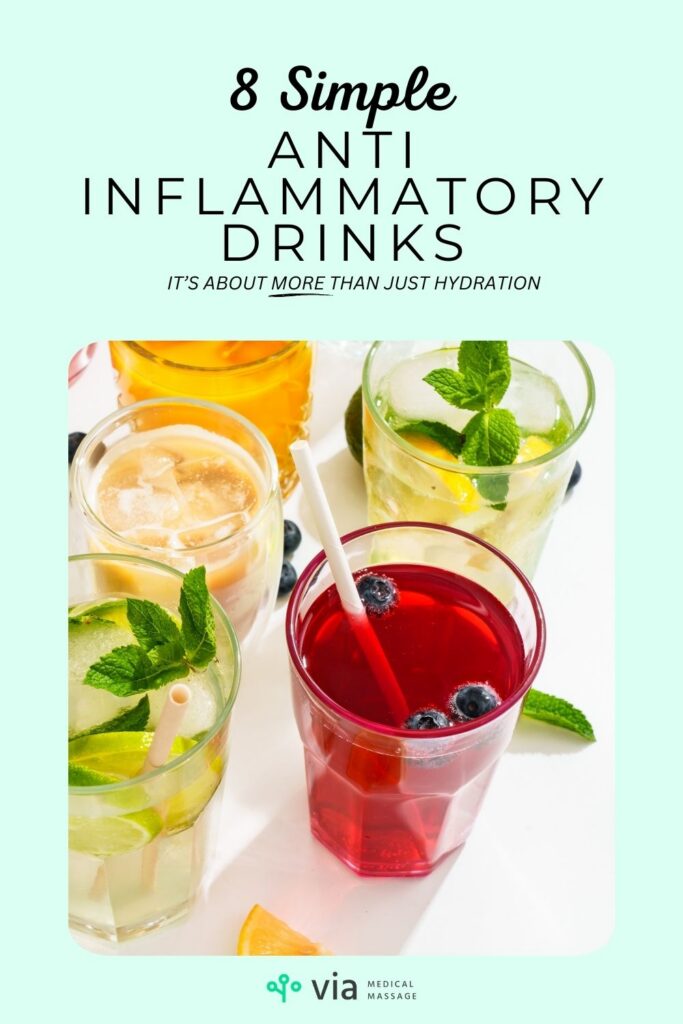


What you drink each day can play a bigger role in inflammation than most people realize. Hydration supports circulation, lymphatic movement, and tissue repair. Certain beverages also contain compounds that may help calm inflammation in the body.
While anti-inflammatory foods and drinks are not a cure, they can support healing when combined with healthy habits, medical care, and therapeutic bodywork. Below are several anti-inflammatory drinks commonly recommended to help support recovery and overall wellness.
Water
Sometimes the most powerful anti-inflammatory drink is also the simplest: water. Proper hydration helps circulation, supports the lymphatic system, and allows your body to move nutrients and remove waste efficiently.
Most adults should aim for about half their body weight in ounces of water per day.
To make it easier, here’s a quick reference:
- 100 lbs = 50 oz water (about 6.25 cups or 1.5 liters)
- 120 lbs = 60 oz water (about 7.5 cups or 1.8 liters)
- 140 lbs = 70 oz water (about 8.75 cups or 2.1 liters)
- 160 lbs = 80 oz water (about 10 cups or 2.4 liters)
- 180 lbs = 90 oz water (about 11.25 cups or 2.7 liters)
- 200 lbs = 100 oz water (about 12.5 cups or 3.0 liters)
- 220 lbs = 110 oz water (about 13.75 cups or 3.3 liters)
- 240 lbs = 120 oz water (about 15 cups or 3.5 liters)
- 250 lbs = 125 oz water (about 15.6 cups or 3.7 liters)
People recovering from surgery, illness, or dealing with chronic inflammation may need even more to support tissue repair and healing. If you are trying to reduce inflammation, consistently drinking enough water is one of the easiest and most important habits to build.
Add some fresh-squeezed lemon juice to your water to help support hydration, which is essential for circulation and lymphatic flow.
Lemons also contain vitamin C and antioxidants that may support the body’s natural repair processes.
Green Tea
Green tea is one of the most widely studied anti-inflammatory drinks. It contains antioxidants called catechins, particularly EGCG, which may help reduce inflammatory activity in the body.
Regular green tea consumption has been associated with improved metabolic health, reduced oxidative stress, and support for the immune system. Many people enjoy it warm, but it can also be served iced.
Turmeric Tea or Golden Milk
Turmeric contains curcumin, a compound known for its anti-inflammatory and antioxidant properties. Golden milk is a popular drink made with turmeric, milk or plant-based milk, ginger, and sometimes cinnamon or honey.
This warming drink is often used to support joint health, muscle recovery, and immune function.
Ginger Tea
Ginger has been used for centuries to help with digestion and inflammation. It contains compounds called gingerols that may help reduce inflammatory responses and muscle soreness.
Many people drink ginger tea to support digestion, but it can also be helpful for people dealing with chronic pain or joint stiffness.
Tart Cherry Juice
Tart cherry juice is well known in athletic and recovery circles. It contains antioxidants called anthocyanins, which may help reduce muscle soreness and inflammation after physical activity.
Some studies suggest tart cherry juice may also support sleep quality, which plays a major role in recovery and inflammation control.
Berry Smoothies
Berries such as blueberries, strawberries, and blackberries are packed with antioxidants that help fight oxidative stress. Blending berries into a smoothie with yogurt, protein, or leafy greens creates a drink that supports both nutrition and recovery.
Berry smoothies are a simple way to add anti-inflammatory nutrients into your daily routine.
Bone Broth
Bone broth has gained popularity as a recovery drink because it contains collagen, amino acids, and minerals that support joint and connective tissue health.
While it is technically more of a savory drink, many people incorporate bone broth into their routine to support gut health and recovery.
Green Vegetable Juices
Juices made from leafy greens like spinach, kale, and celery contain vitamins, minerals, and plant compounds that support the body’s natural detox and inflammatory response systems.
Adding cucumber, apple, or lemon can improve flavor while still keeping the drink nutrient-dense.
MORE: Pair these drinks with the Top 10 Anti-Inflammatory Foods
Support Your Body’s Recovery With the Right Care Team
Nutrition and hydration are important pieces of the inflammation puzzle, but they are not the only ones. Hands-on therapies such as medical massage can help improve circulation, reduce muscle tension, and support lymphatic movement, which all play a role in managing inflammation.
At Via Medical Massage, we specialize in treatments that support pain relief, injury recovery, post-surgical care, and lymphatic health. We also collaborate with trusted health and wellness partners who can help guide you on nutrition, recovery strategies, and lifestyle habits that support long-term healing. Book a massage today; our booking portal is online and open around the clock.
If you are in the Omaha or Lincoln area, our team can help you explore a collaborative approach to reducing inflammation through massage therapy and connections with qualified nutrition and wellness professionals.
Reach out to Via Medical Massage to learn how we can support your recovery and overall wellness.
Pin Anti-Inflammatory Drinks